Jujuy Region – Seven Colours, Stones, and Plot Twists.
Leaving Salta city was, I’ll admit, a relief. Don’t get me wrong, there are charming corners, but our “trusty” navigator, Google Maps, has a slightly sadistic sense of humour. She delights in construction zones, back alleys, and neighbourhoods where even the dogs look suspicious.
Miraculously, this time she behaved and guided us out of town without incident. Small victories matter on the road.
We headed north toward Jujuy province, lured by promises of dramatic landscapes, colonial villages, and enough colour to make a painter weep.
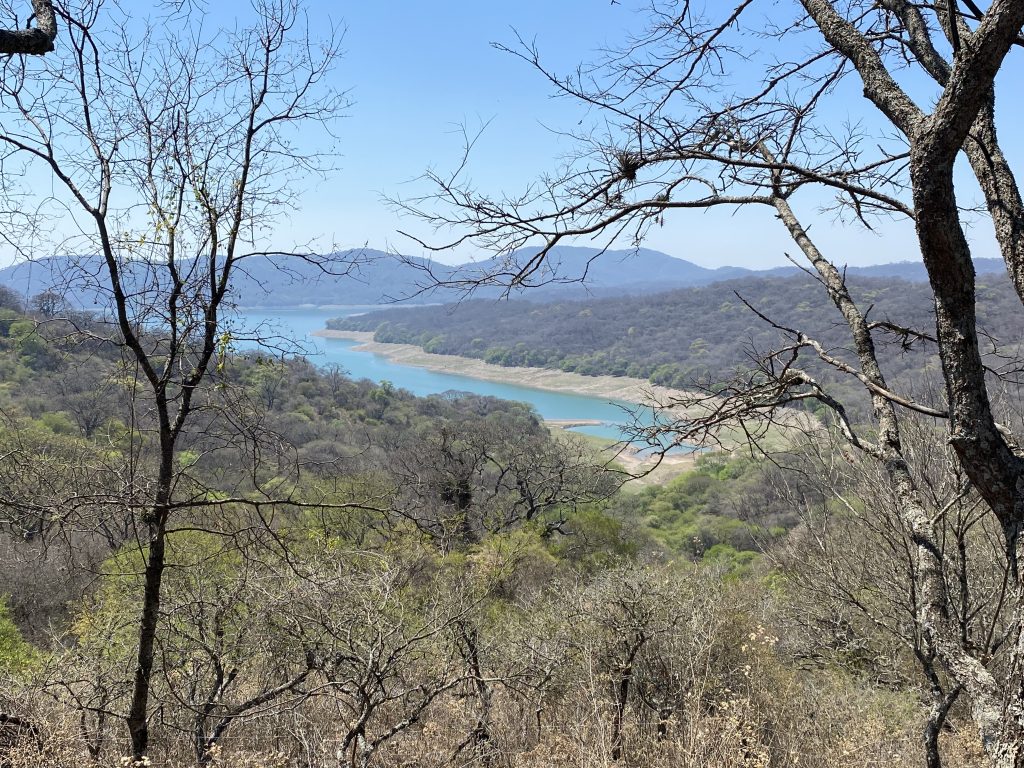
The drive began innocently: lush green forest, winding roads, and that misty, cinematic light that makes you feel like you’re starring in your own travel documentary.
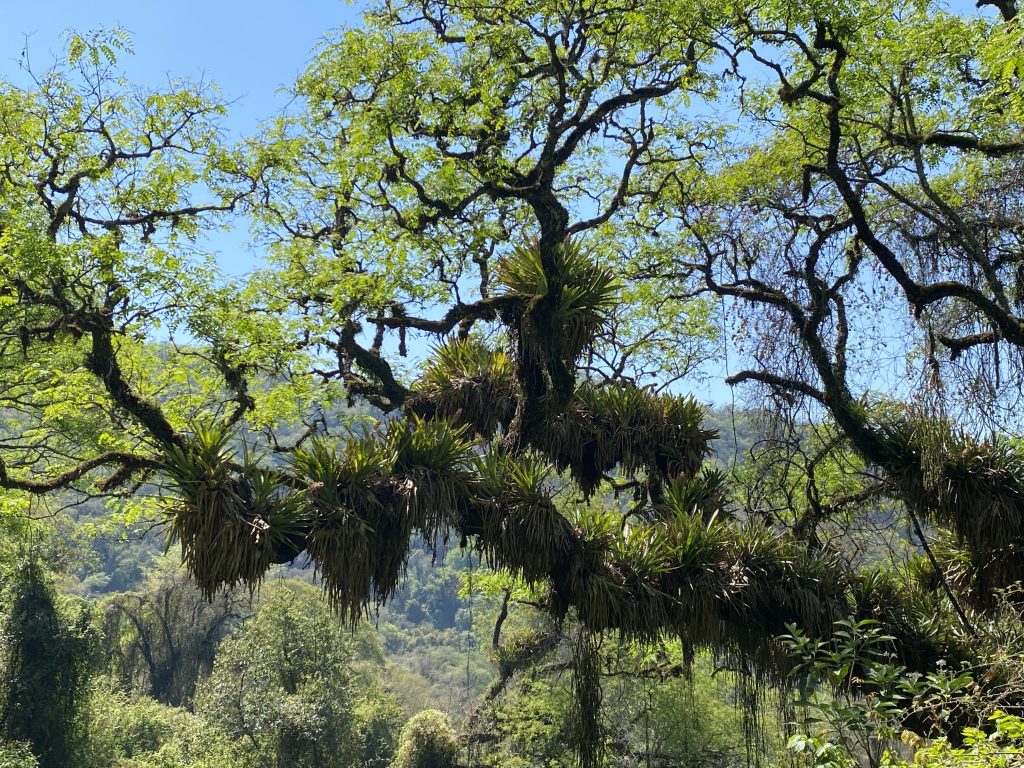
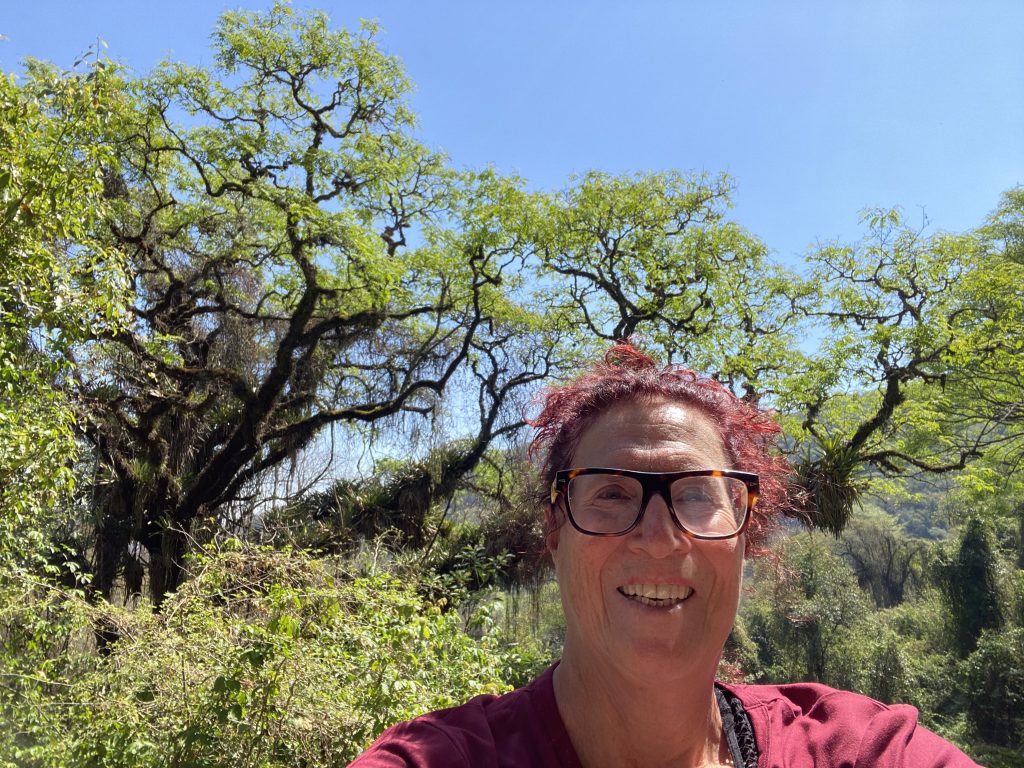
It reminded me of the rainforests of Anaga in Tenerife or the Scottish Highlands, only here, the trees were dripping with bromeliads.
Those exotic plants I usually see in overpriced garden centres were just… growing there.
Wild. Free. Fabulous. Cue an embarrassing number of photos.
And then, because Argentina loves a dramatic plot twist, the greenery vanished. Just like that. Jungle gone, desert on.
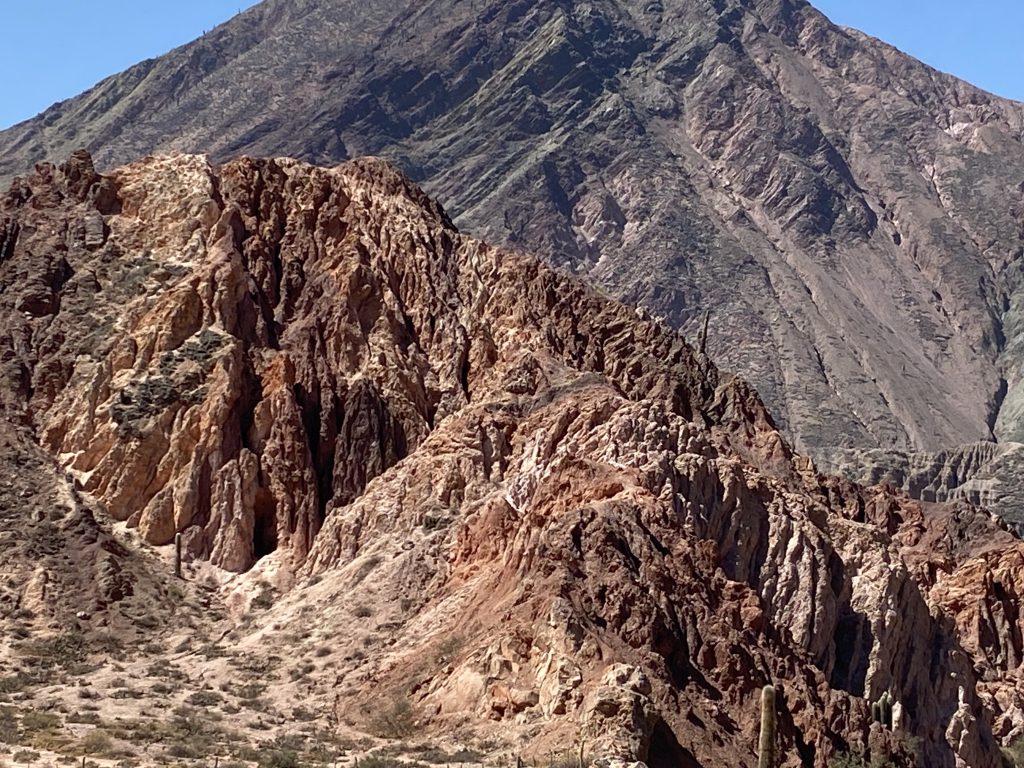
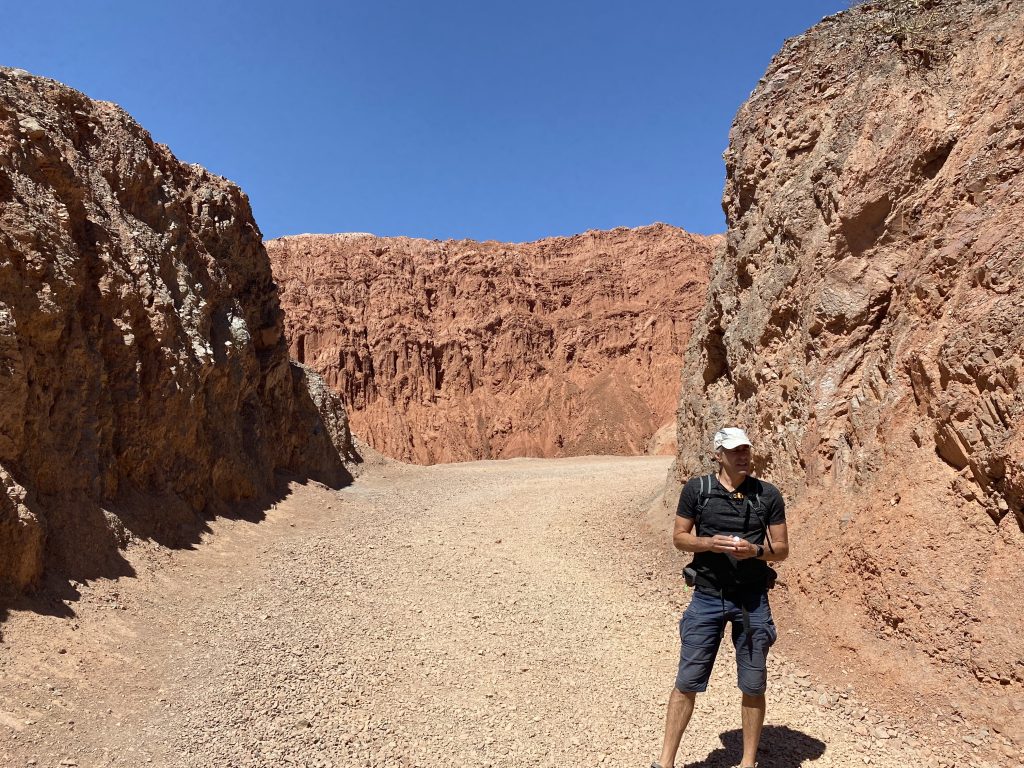
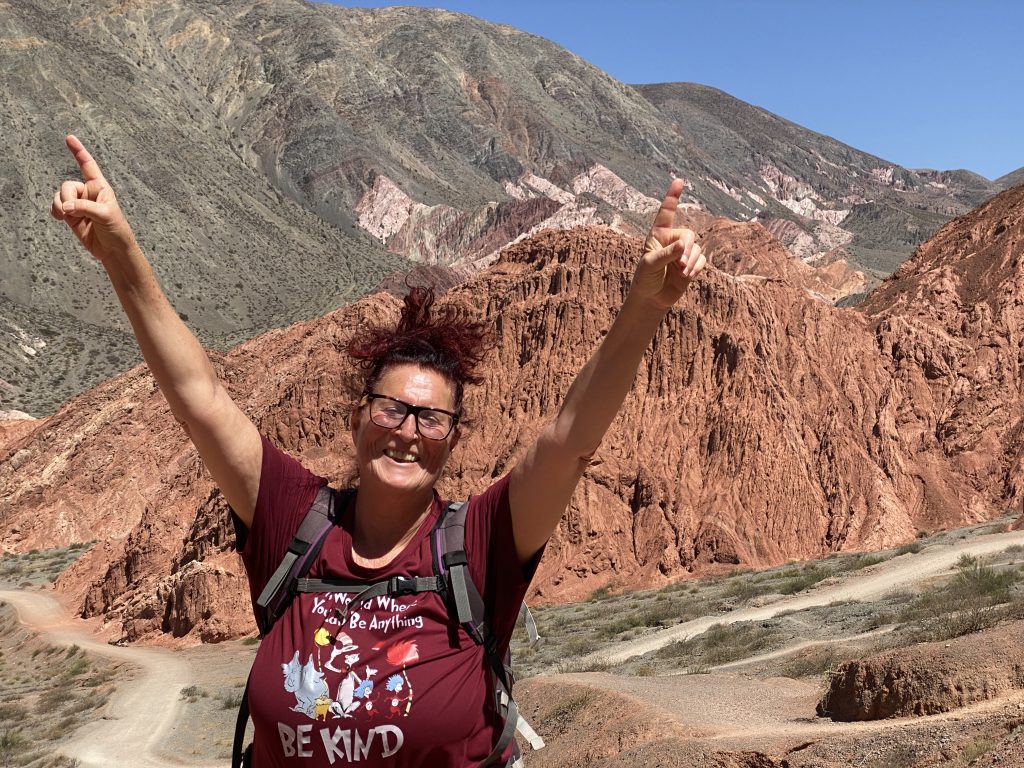
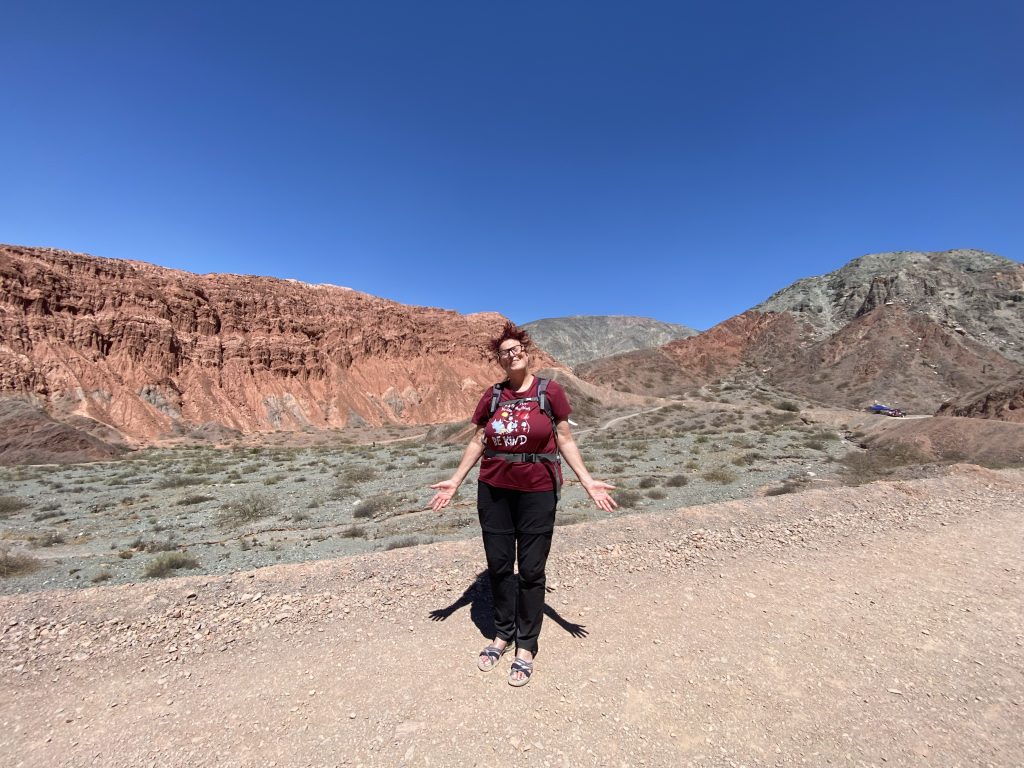
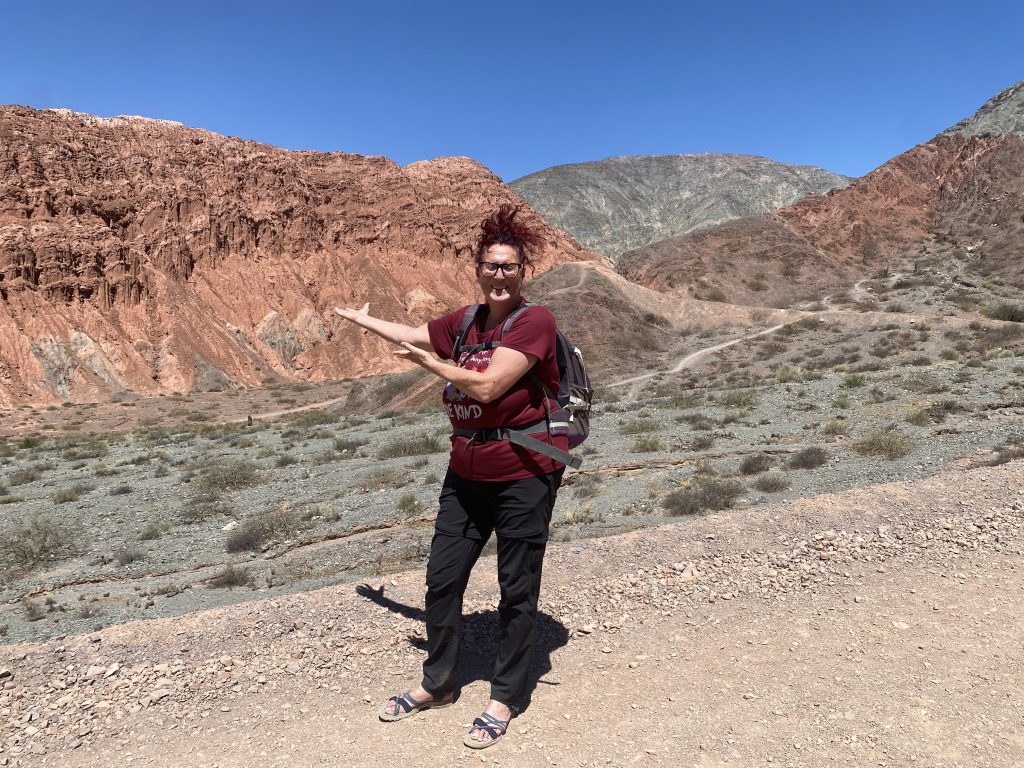
Within five minutes, we were surrounded by arid, multi-coloured mountains that looked hand-painted by an overenthusiastic god with an unlimited palette.
The road narrowed and twisted, demanding Yoni’s full concentration and my occasional gasp.
After two and a half hours of scenic swerving, we both desperately needed caffeine… and a bathroom.
Every “coffee ahead” sign, however, turned out to be an abandoned shack straight out of a post-apocalyptic film.
Just as I was about to lose faith (and bladder control), the Universe intervened.
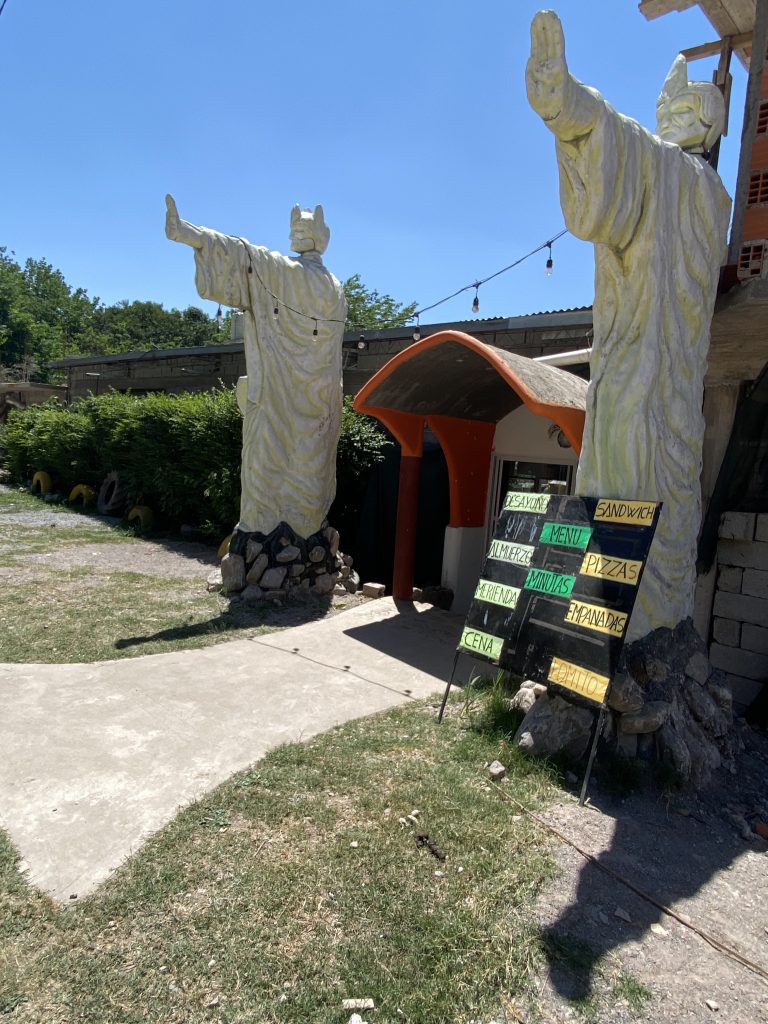
A sign appeared: Camping A Hobbit – Café & Restaurant. I didn’t care what it was called; I just wanted coffee.
But two hundred metres later, we rolled into another universe entirely.
Standing guard at the entrance were two massive statues of the Argonath, yes, those ancient kings from The Lord of the Rings.
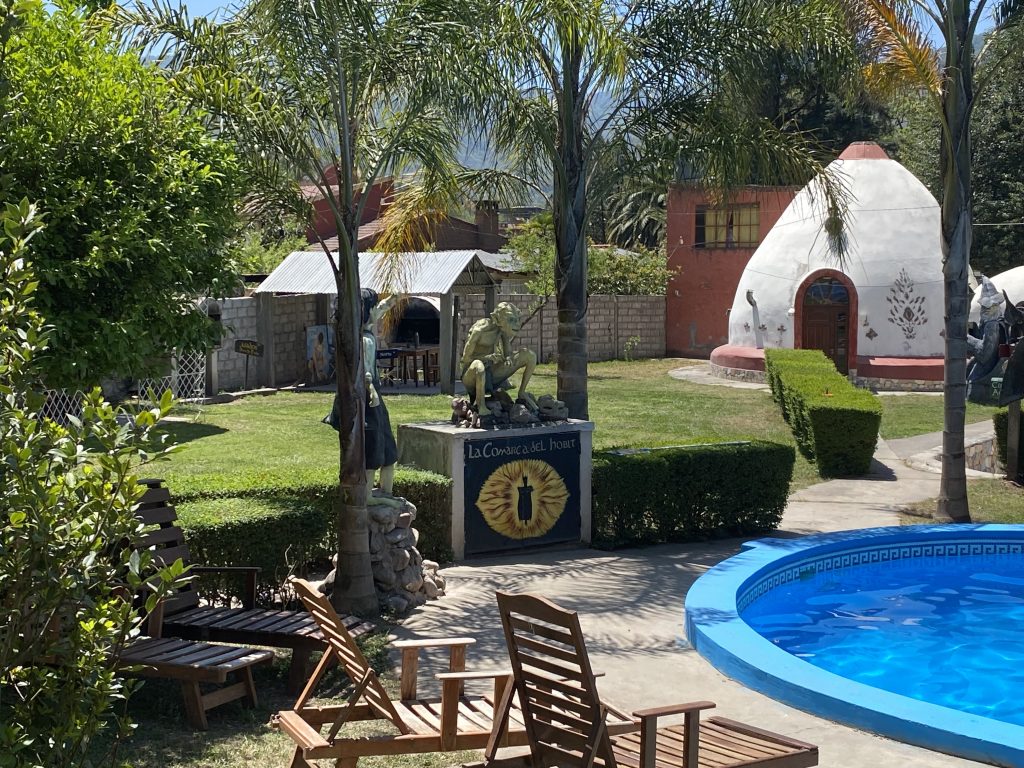
The place was a full Middle-earth fever dream: Hobbit-hole cabins, elves, wizards, even an orc lurking among the trees.
Coffee arrived with fresh orange juice, and honestly, I half-expected Gandalf to show up with the bill.
Refreshed, delighted, and slightly confused, we continued north.
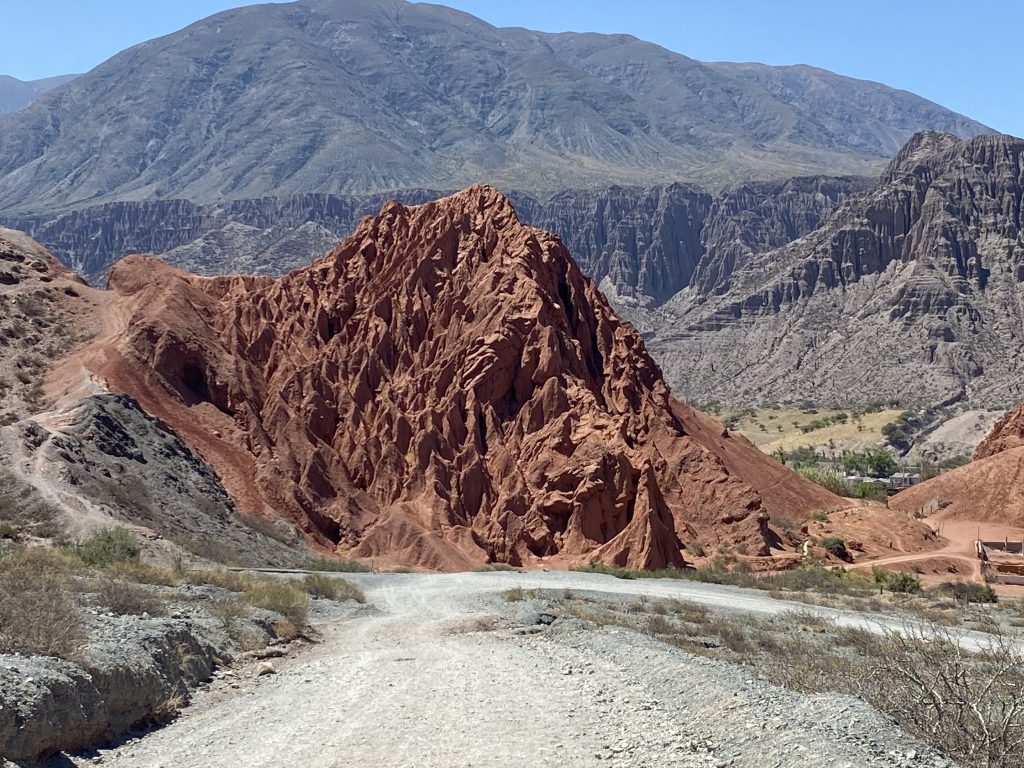
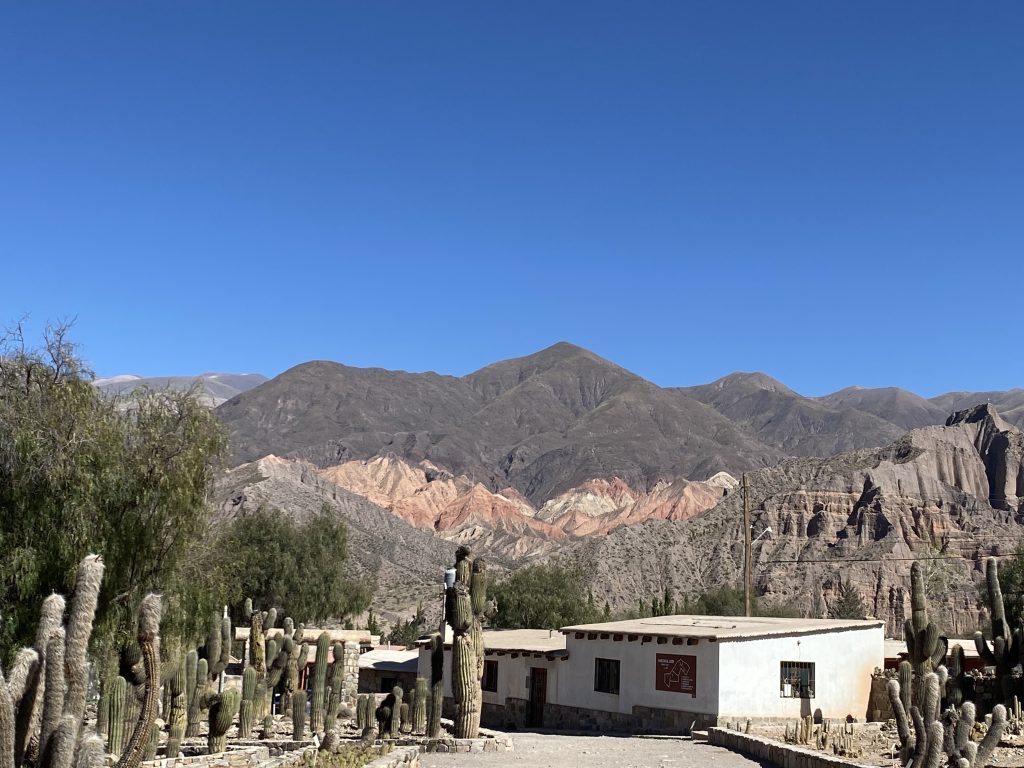
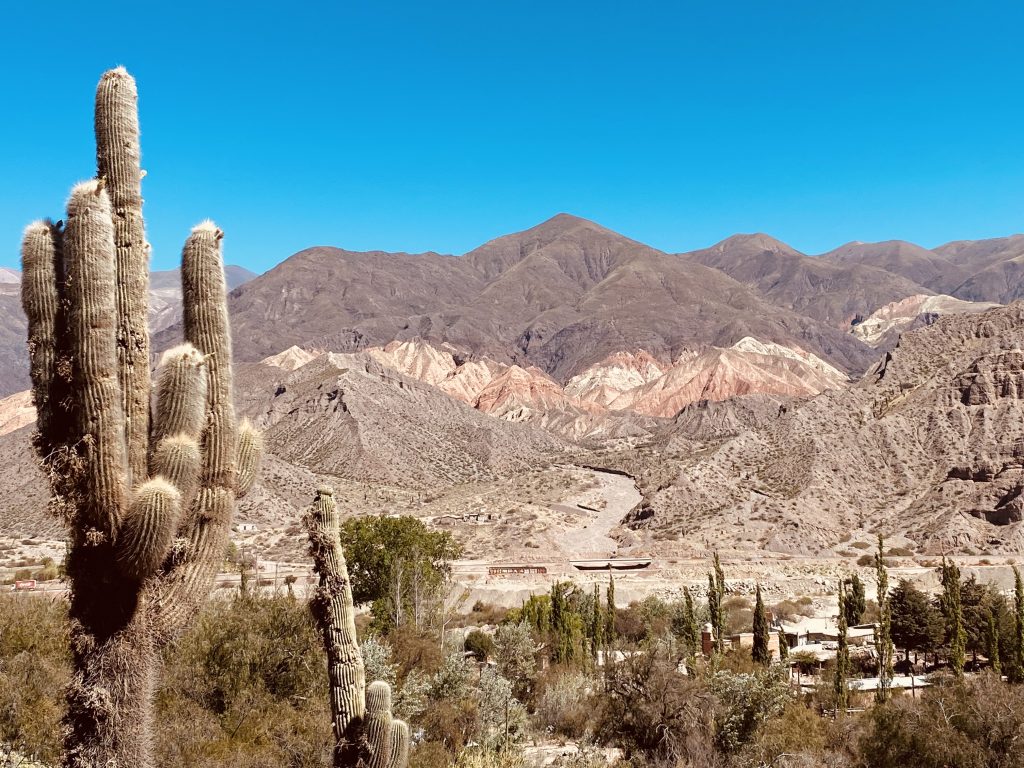
Our next stop was Purmamarca, the tiny Andean village sitting beneath the legendary Seven-Coloured Mountain.
We arrived around 2 p.m. and claimed a shady spot in the plaza for a picnic of leftover empanadas and mandarins.
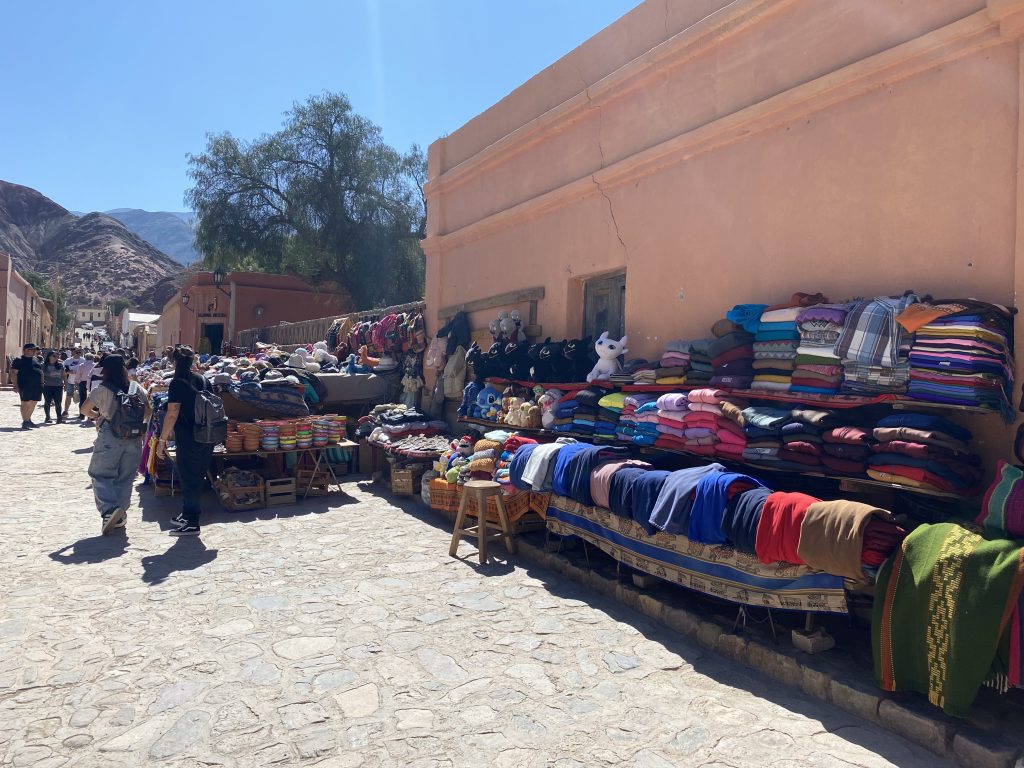
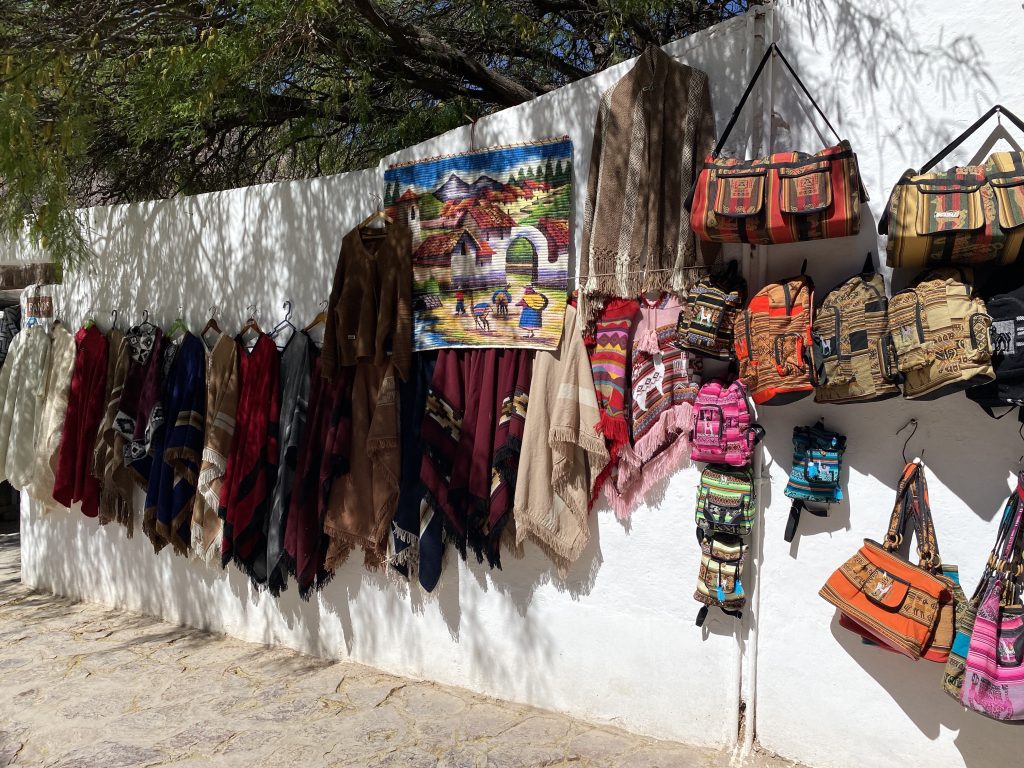
The town itself was charming and utterly overrun with tourists shopping for ponchos, pottery, and anything made of llama wool.
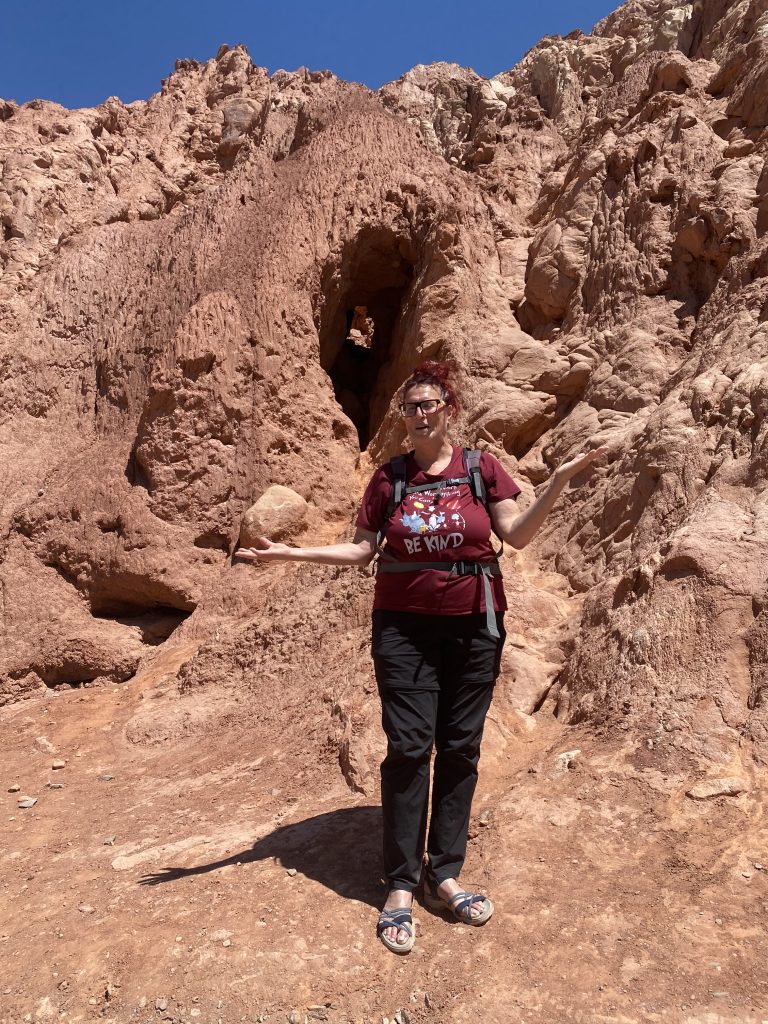
But the real star was the Paseo de los Colorados, a loop trail wrapping around those painted hills.
No photo, no drone, no cinematic filter can do it justice.
The scale, the colours, the silence, it makes you feel small in the best possible way.
This is the kind of beauty you store in your soul, not your camera roll.
By evening, we reached Tilcara, where we’d spend the night.
Our accommodation turned out to be a surprise eco-lodge in the middle of nowhere: cosy, quiet, and wrapped in absolute silence.
When the sun went down, the sky exploded into stars. Not bad for a “budget stay.”
The next morning began gently, with an unexpectedly excellent breakfast.
There’s nothing like good coffee, fresh bread, and freshly squeezed orange juice to temporarily erase the knowledge that you’re about to spend hours in a car.
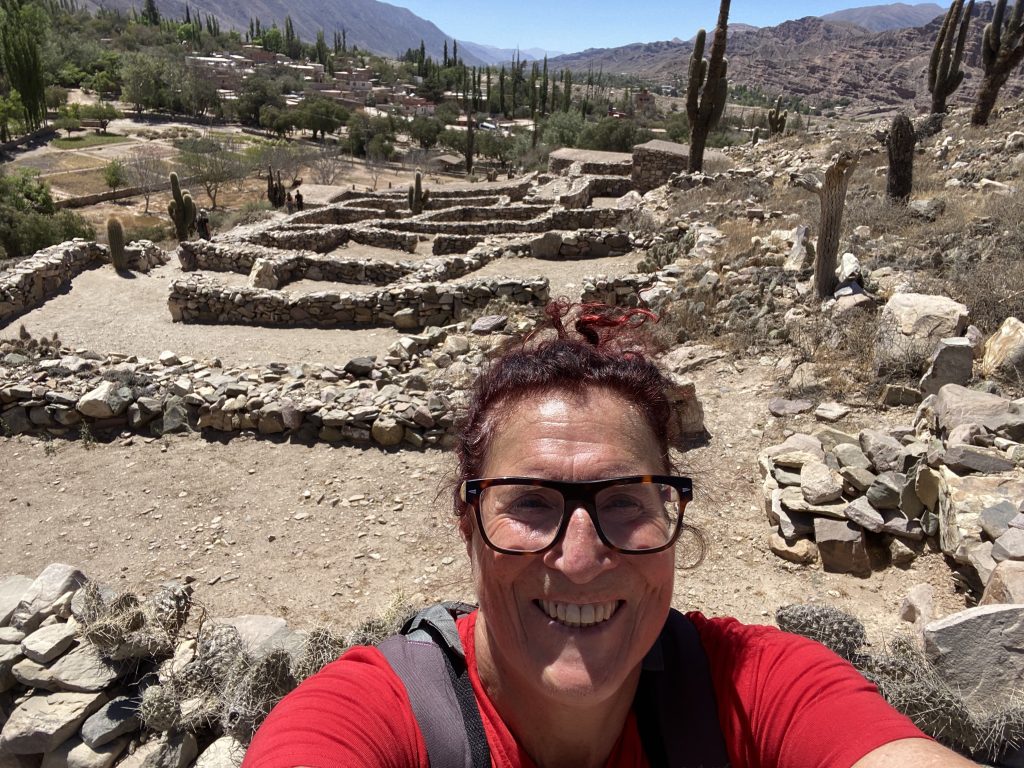
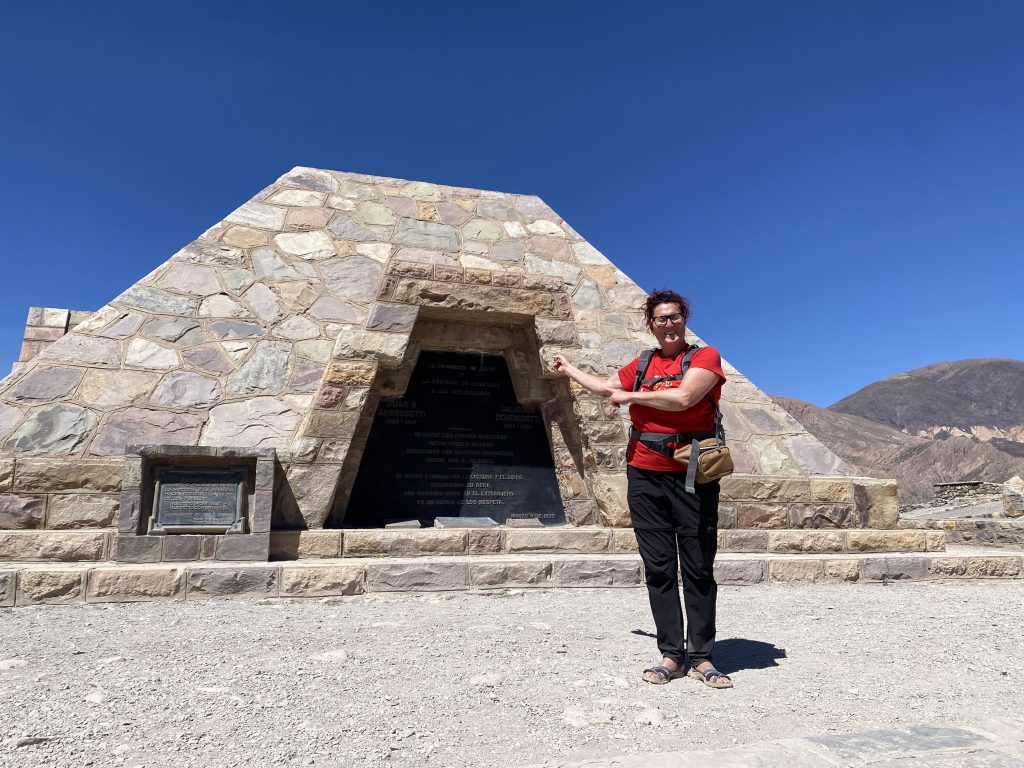
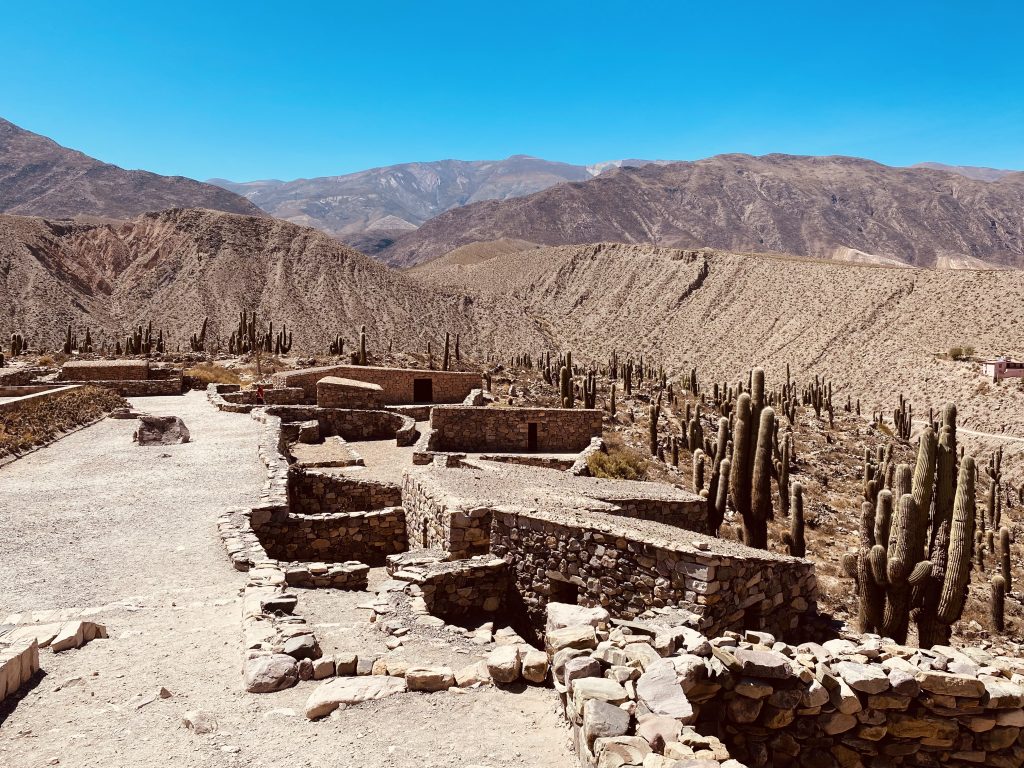
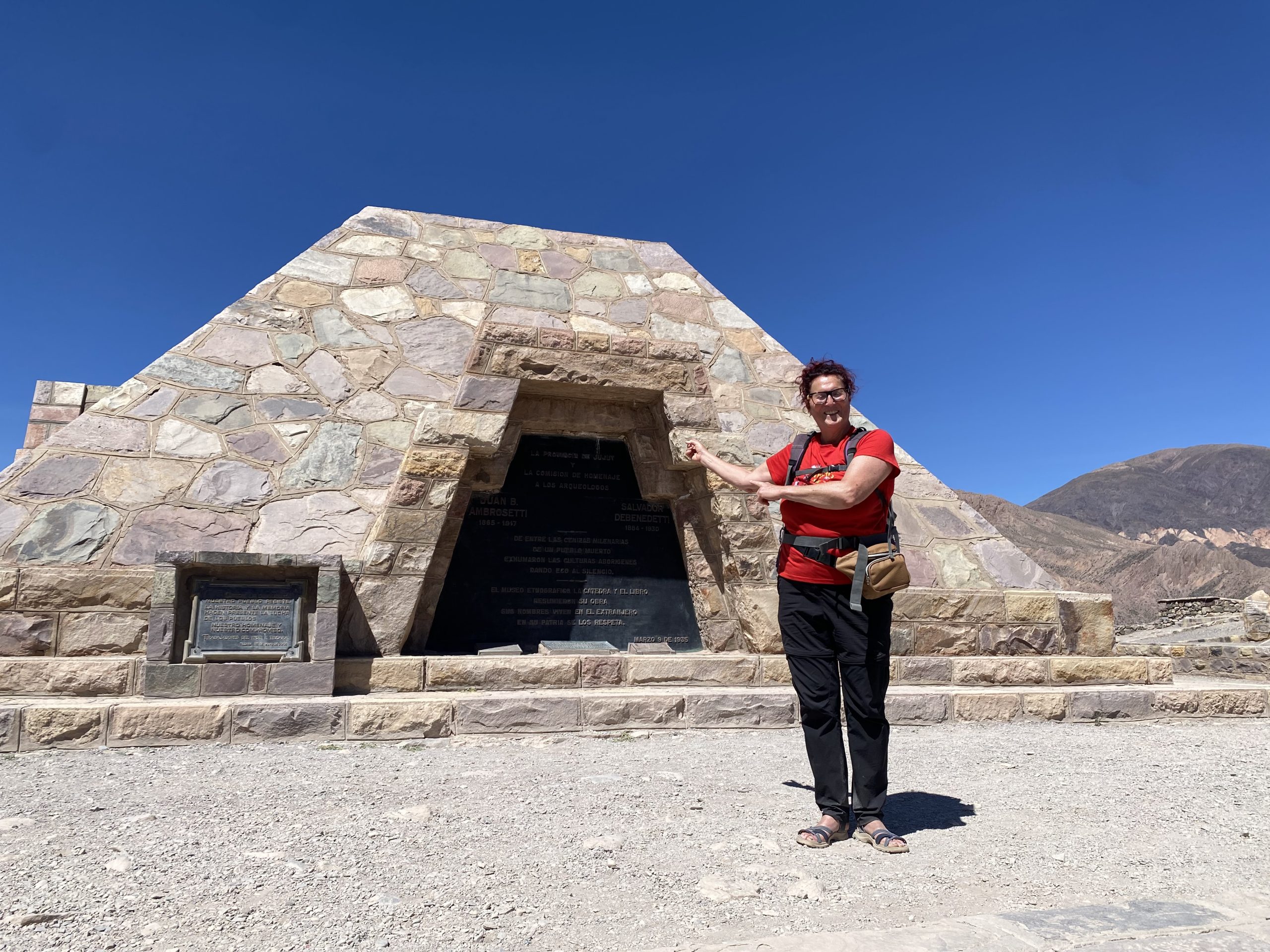
Our first stop was Pucará de Tilcara, dramatically labelled “The Fortress of Tilcara.”
Before you imagine flaming arrows and epic stone walls, let me clarify: this “fortress” is more of a prehistoric neighbourhood with a branding problem.
Early archaeologists saw walls and jumped straight to a castle!…only to later realise they were house foundations.
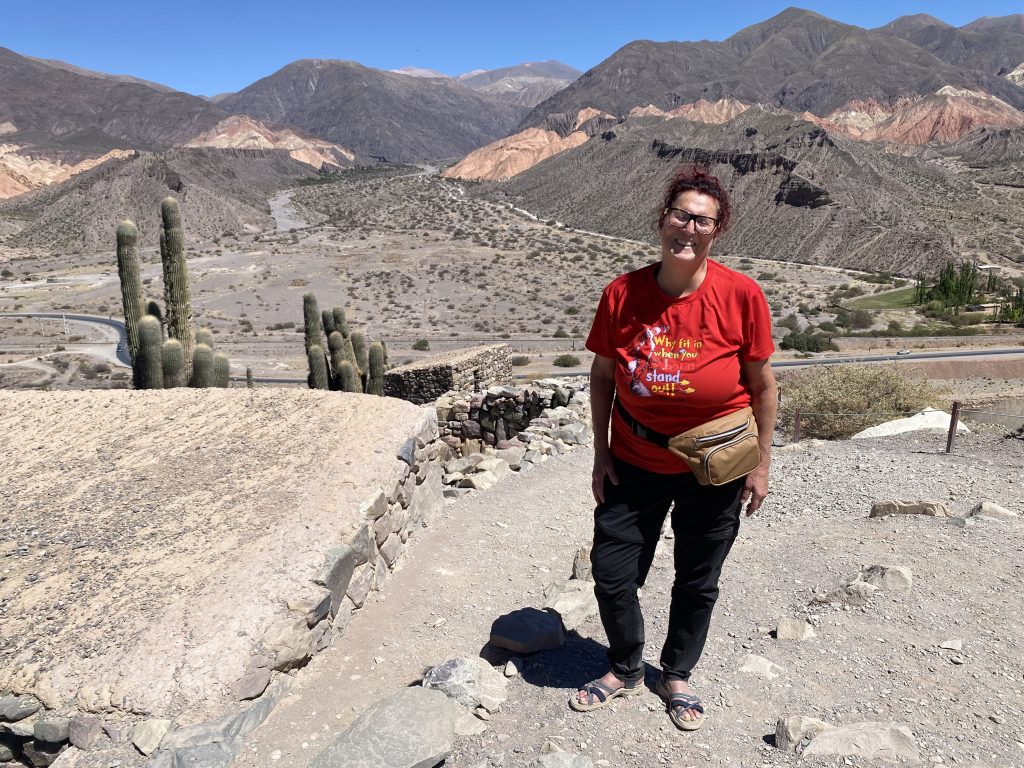
Still, it’s an extraordinary place: a pre-Inca settlement later used by the Inca Empire, filled with terraces, circular homes, and sweeping mountain views.
And as we learned early on, archaeological sites without guides are basically just “large collections of rocks.”
Even with my background in archaeology, I need context. For Yoni, it’s non-negotiable, otherwise he squints thoughtfully and says, “So… rocks?”
Luckily, our guide was fantastic, weaving stories that brought the site to life.
She ended on a sobering note, though, explaining how many of Jujuy’s indigenous people are still treated as second-class citizens today.
History, it turns out, doesn’t stay neatly in the past.
By lunchtime, we were hungry and road-weary. We grabbed some local street food: tasty, slightly mysterious, the best kind.
We briefly toyed with the idea of pushing on to Humahuaca. Then reality kicked in: two hours there, six hours back to Salta, and an early start the next day.
No way Jose…
So we retraced our route, paused again in Purmamarca for one last picnic, and began the long drive south.
Four dusty hours later, we reached Salta airport to return the car… just in time to receive a message that our hotel had cancelled on us.
Cue frantic Booking.com scrolling. Thankfully, we found an apartment hotel right in the city centre.
Huge space, perfect location, and decorated by someone who clearly hasn’t changed a lightbulb since 1953.
The air conditioner was the size of a small car, the elevator had double manual doors, and everything smelled faintly of history.
After all that driving, we couldn’t care less.
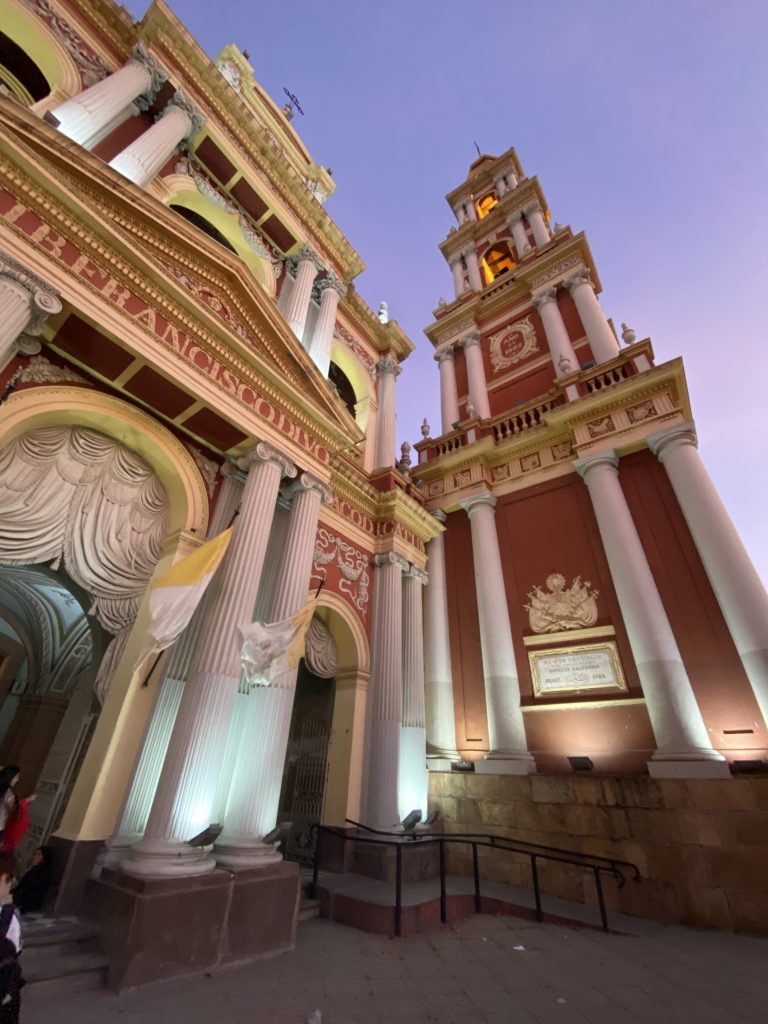
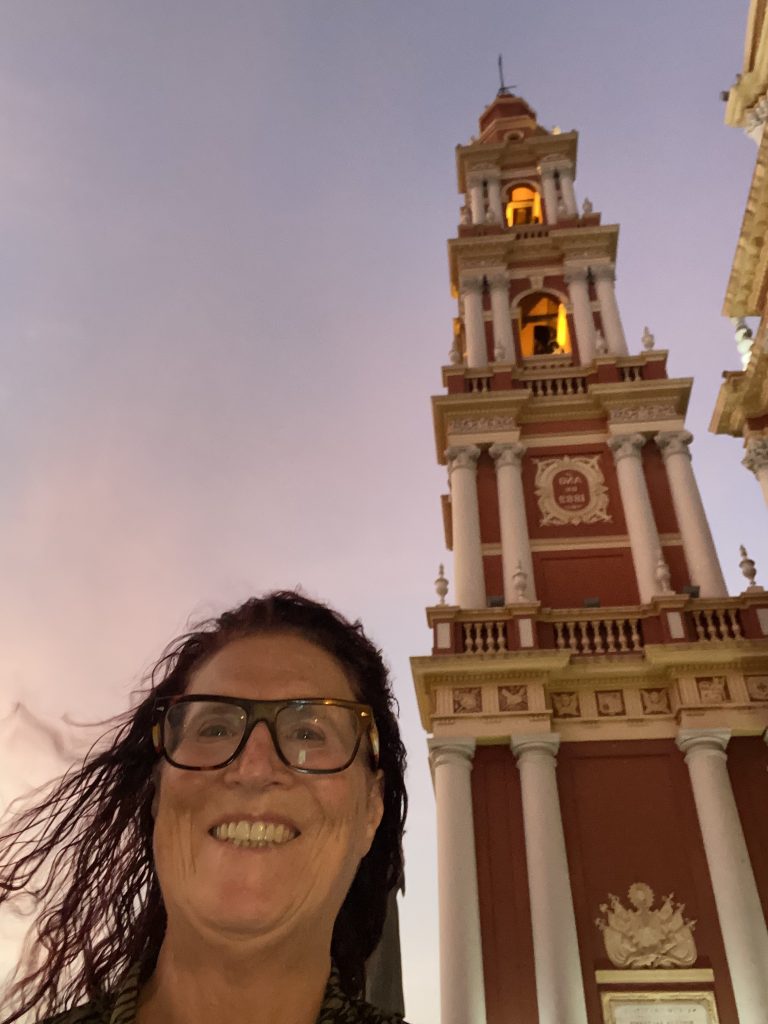
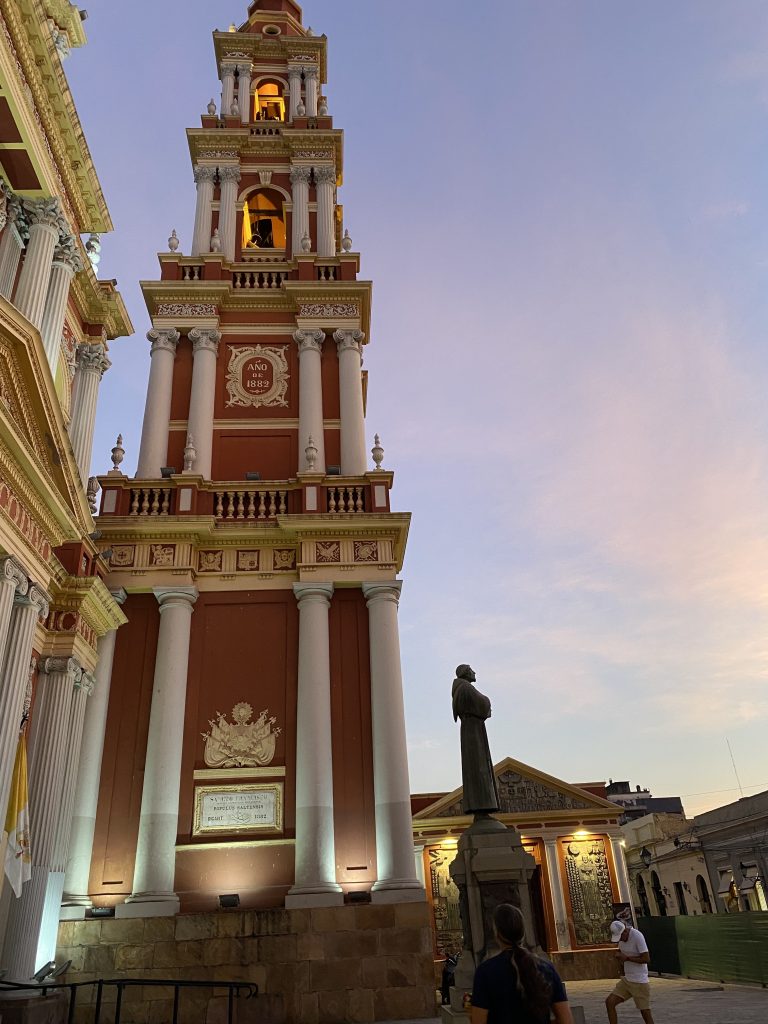
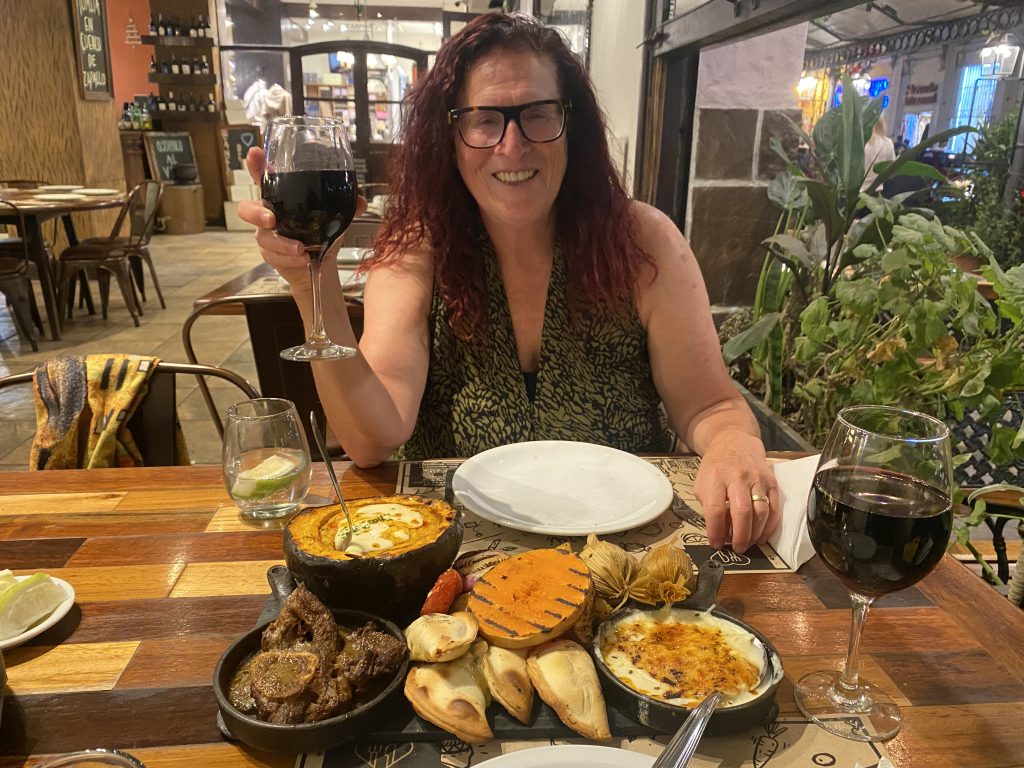
We freshened up, walked one block to the main plaza, and ended the day exactly right: dinner under a glowing sunset, church bells ringing, the city exhaling around us.
Tomorrow, things get properly wild. A 4×4. Remote villages. Staying with local families. Wi-Fi… unlikely. Civilisation… optional.
Stay tuned.