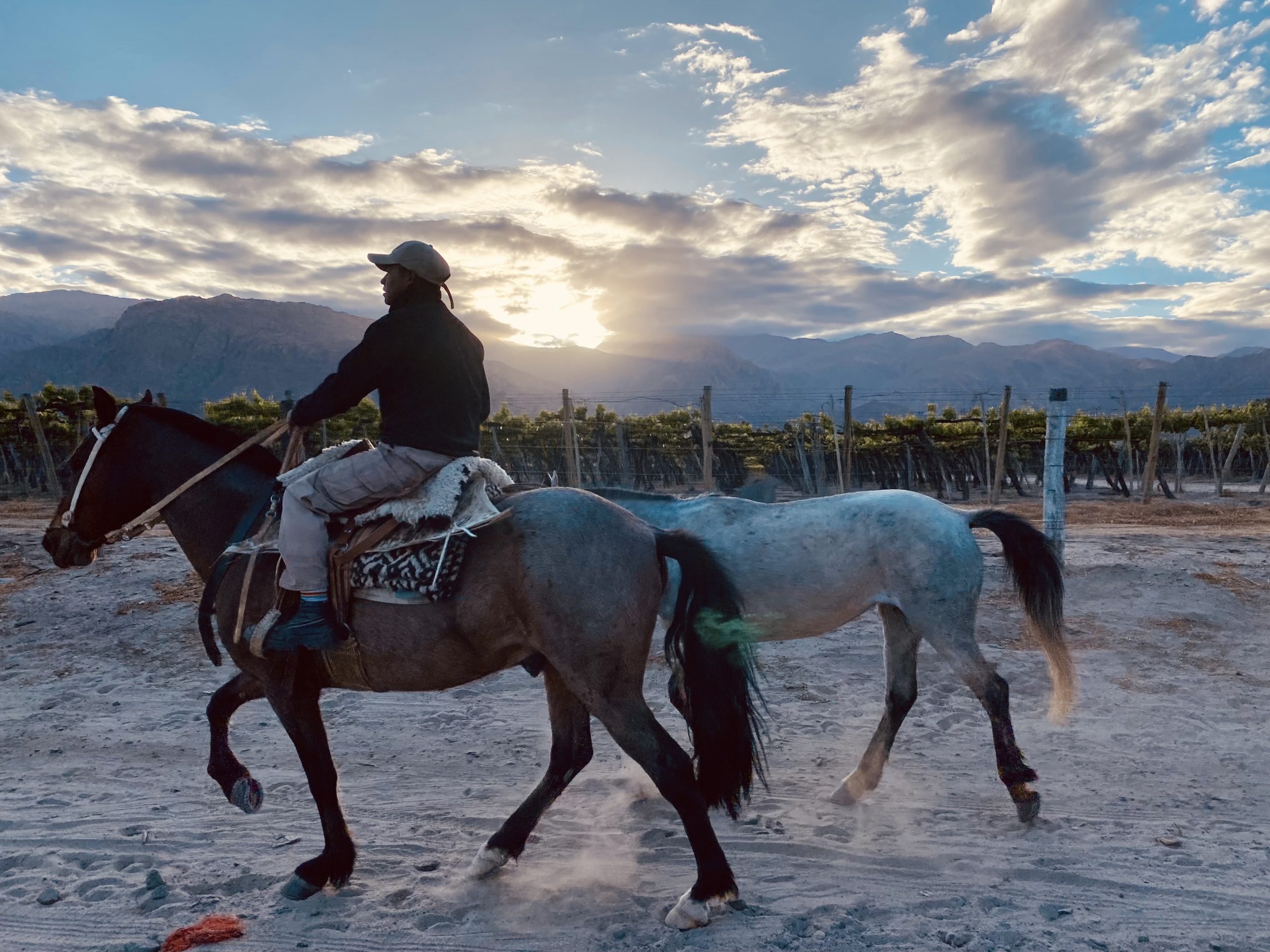
Salta Region – Roads, Revelations, and Red Mountains.
Two hours. That’s all it took for Argentina to reinvent itself… again.
One moment, we were leaving behind Iguazú’s roaring waterfalls and tropical humidity, and the next we landed in a place that looked suspiciously like 1950s Mexico.
Minus the sombreros… though honestly, some of the older men wore them anyway.
I half-expected a mariachi soundtrack to start playing over the airport loudspeakers.
The shift was immediate. New landscape, new faces, new energy. The air felt drier, thinner, charged with something ancient and dusty and a little bit magical.
After picking up our rental car, stocking up on groceries (and obviously “sampling” Salta’s legendary empanadas, purely for research purposes), we set off toward Cafayate via the famous Route 68.
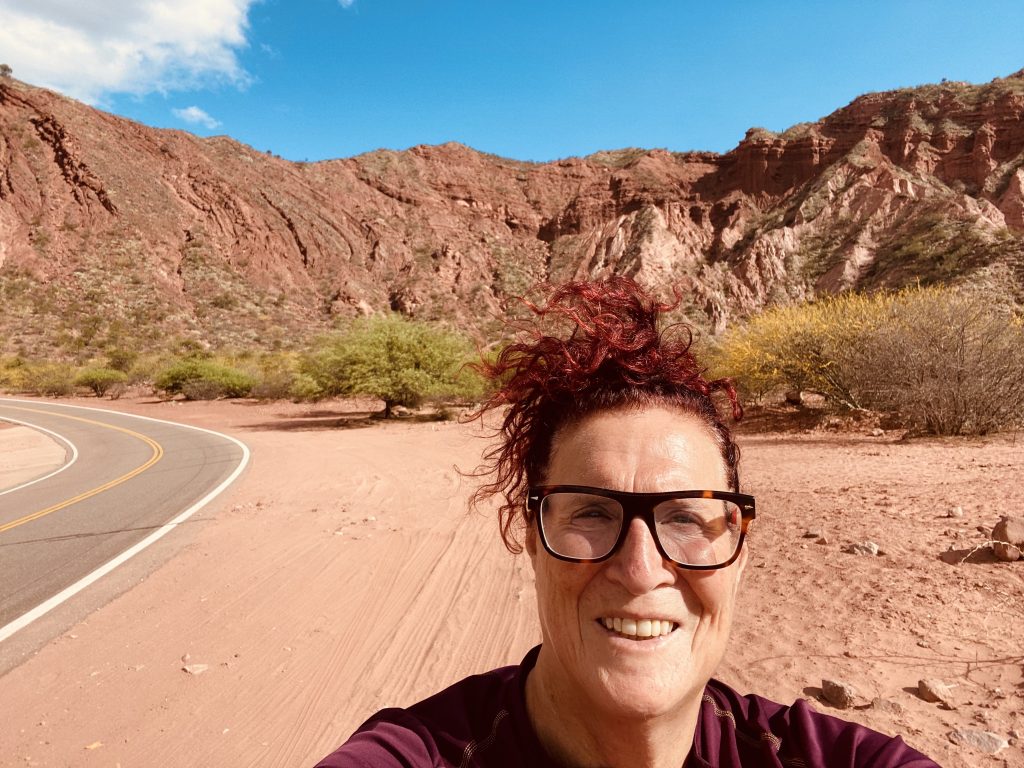
At first, I’ll admit it felt… fine. Pleasant farmland. Nice, but not exactly jaw-dropping. And then, around the 100-kilometre mark…Boom.
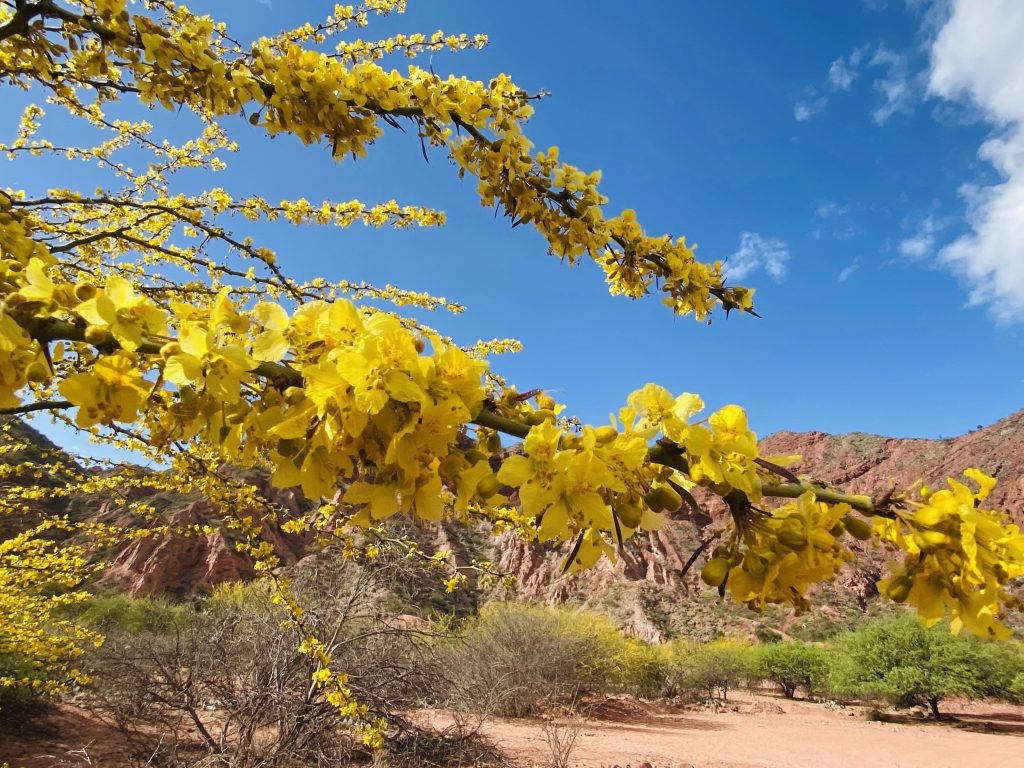
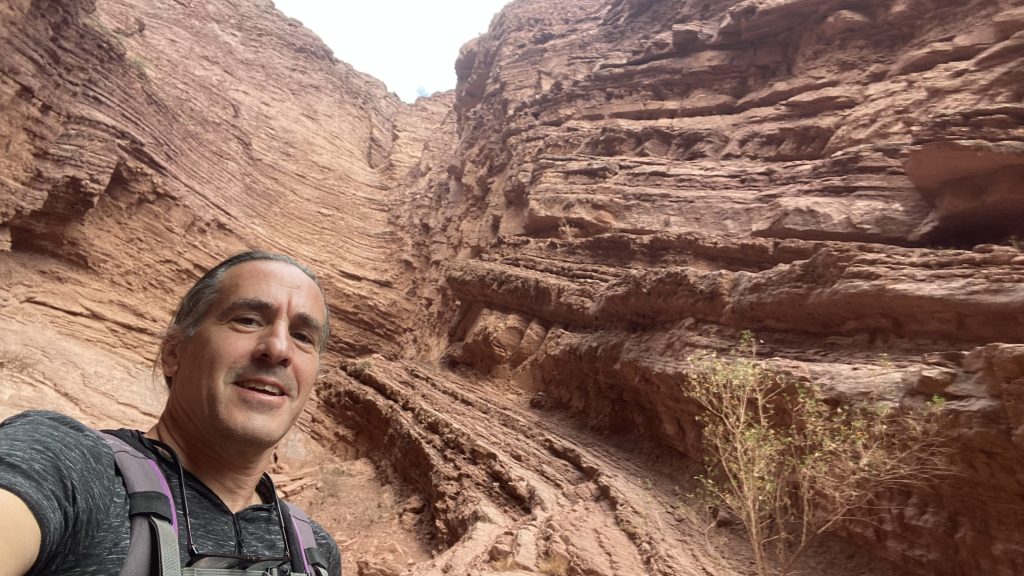
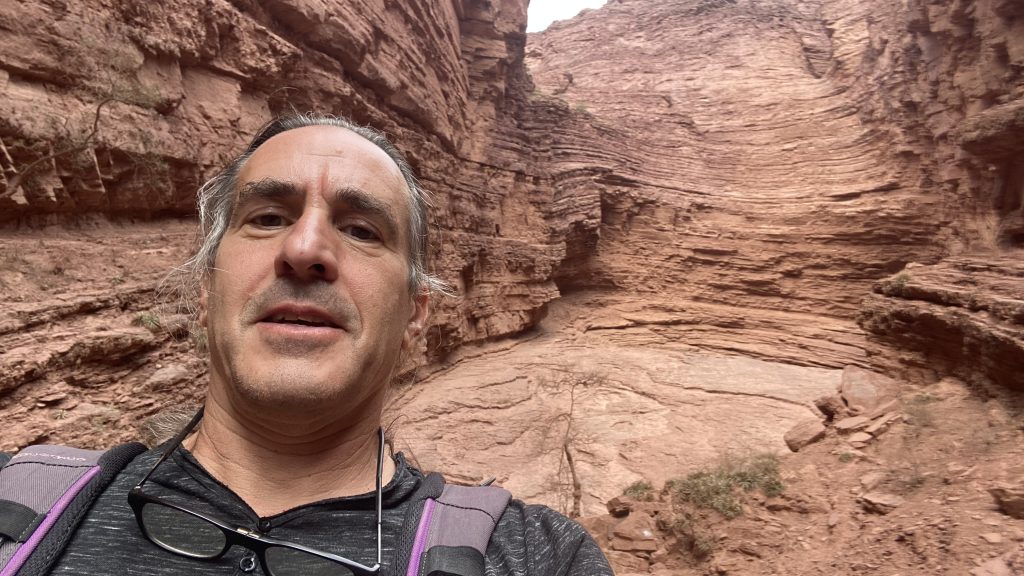
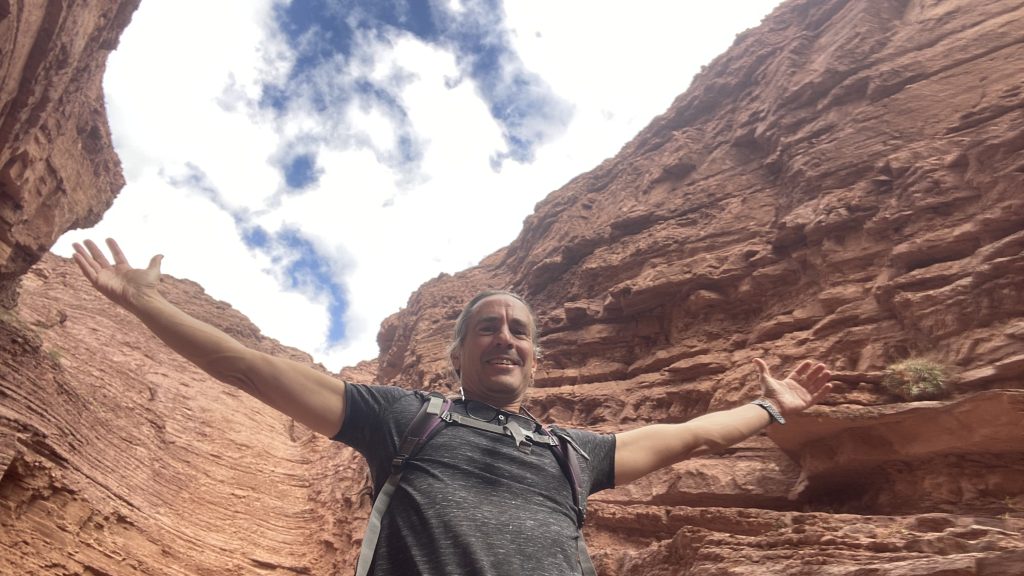
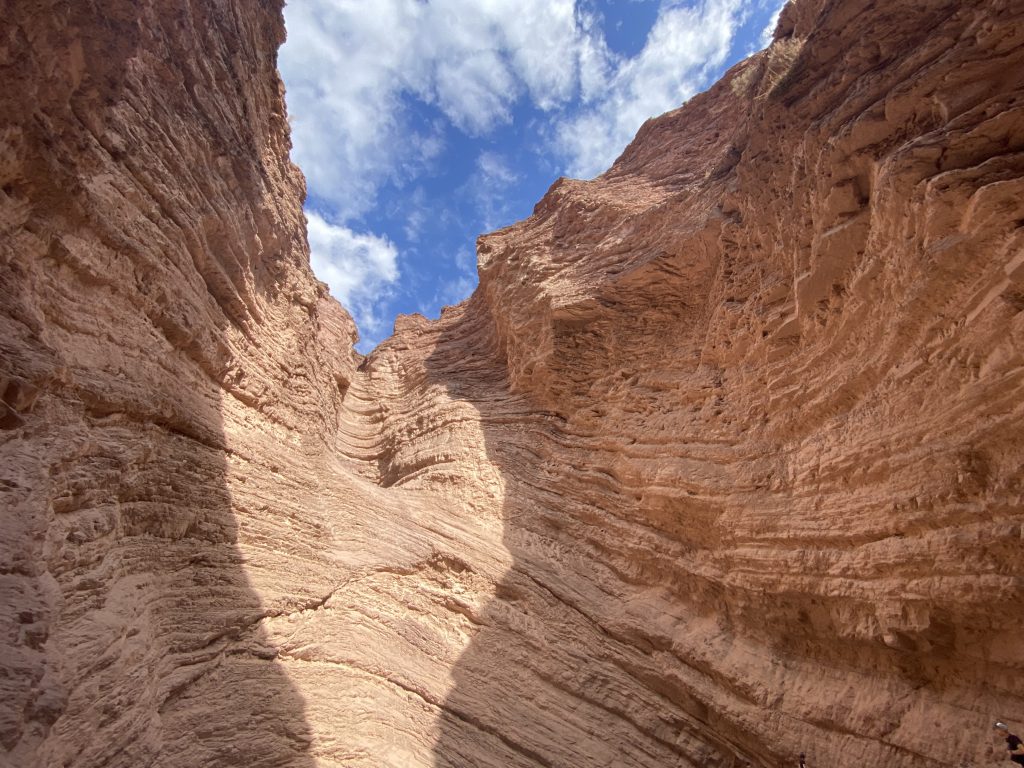
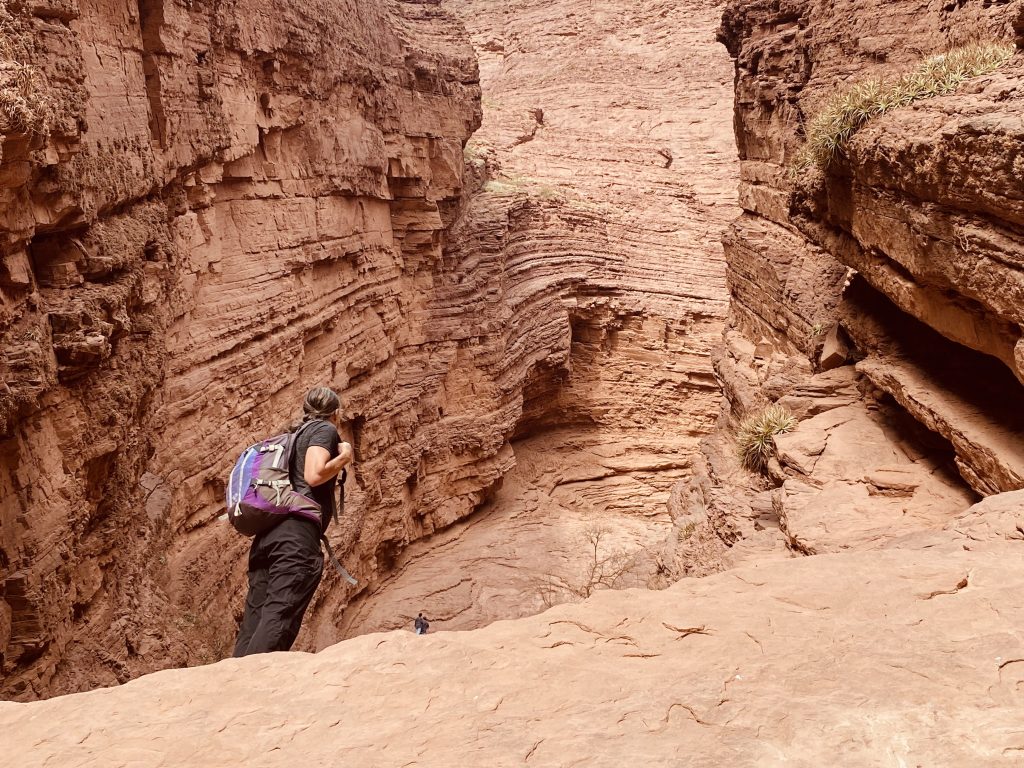
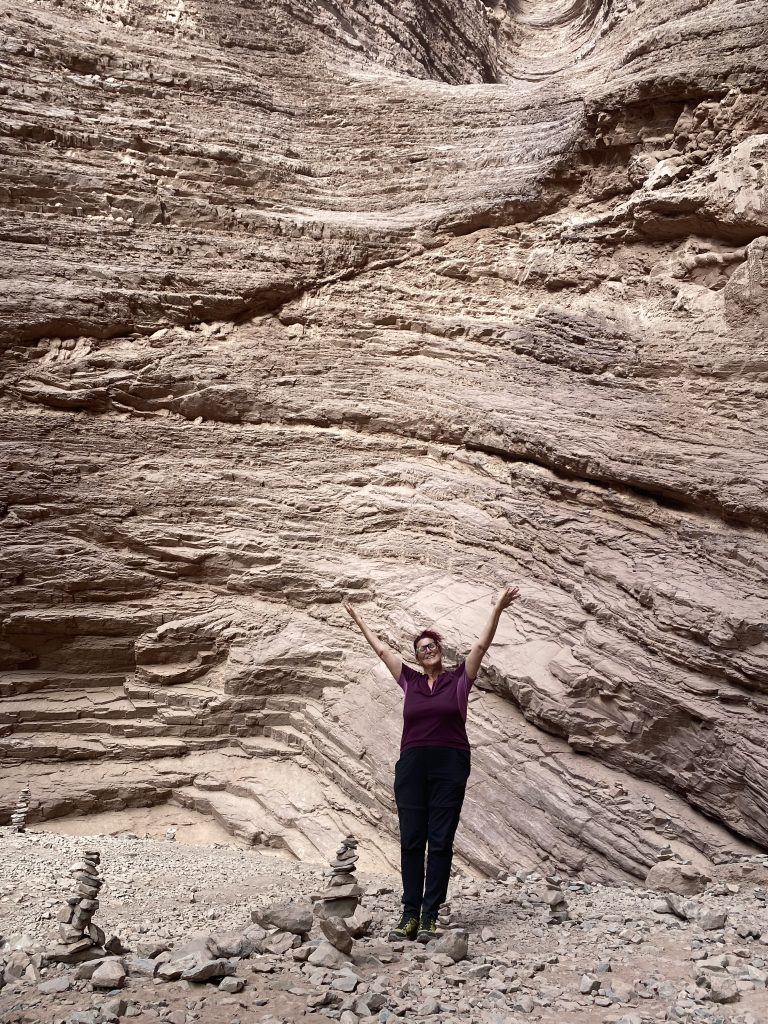
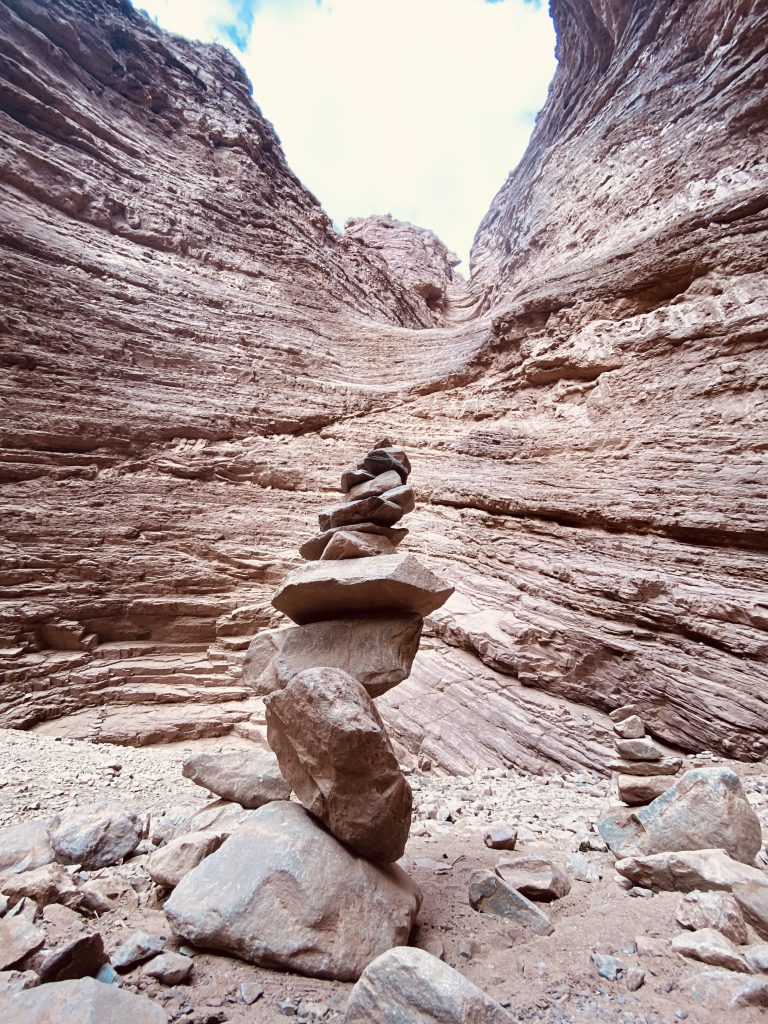
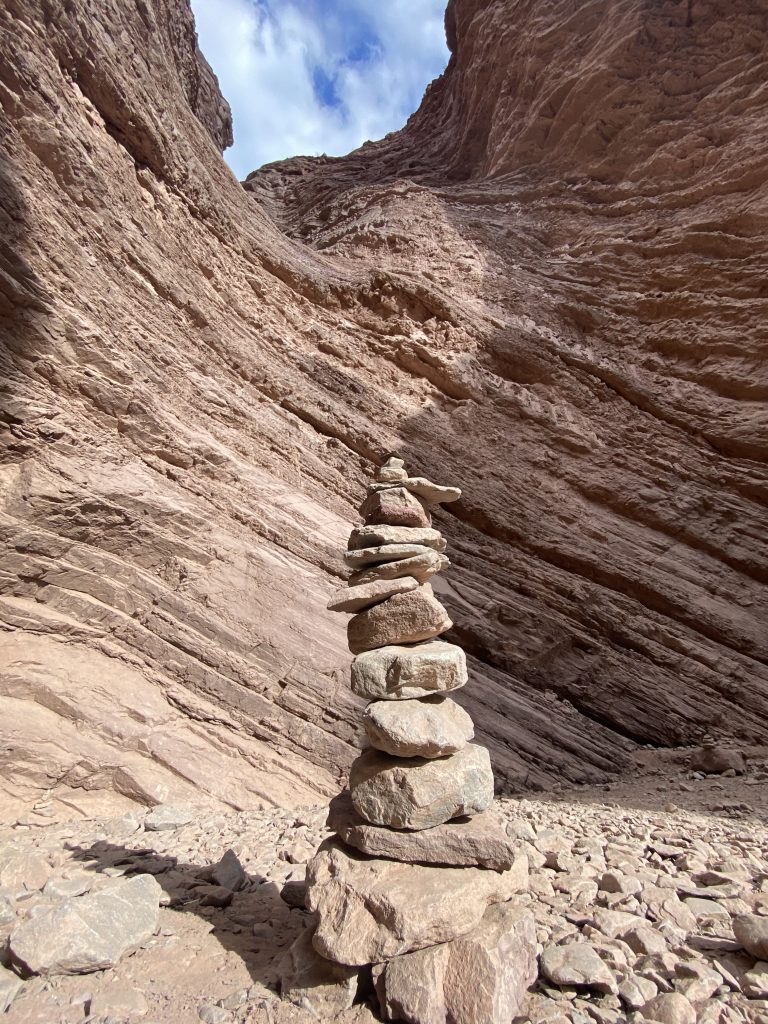
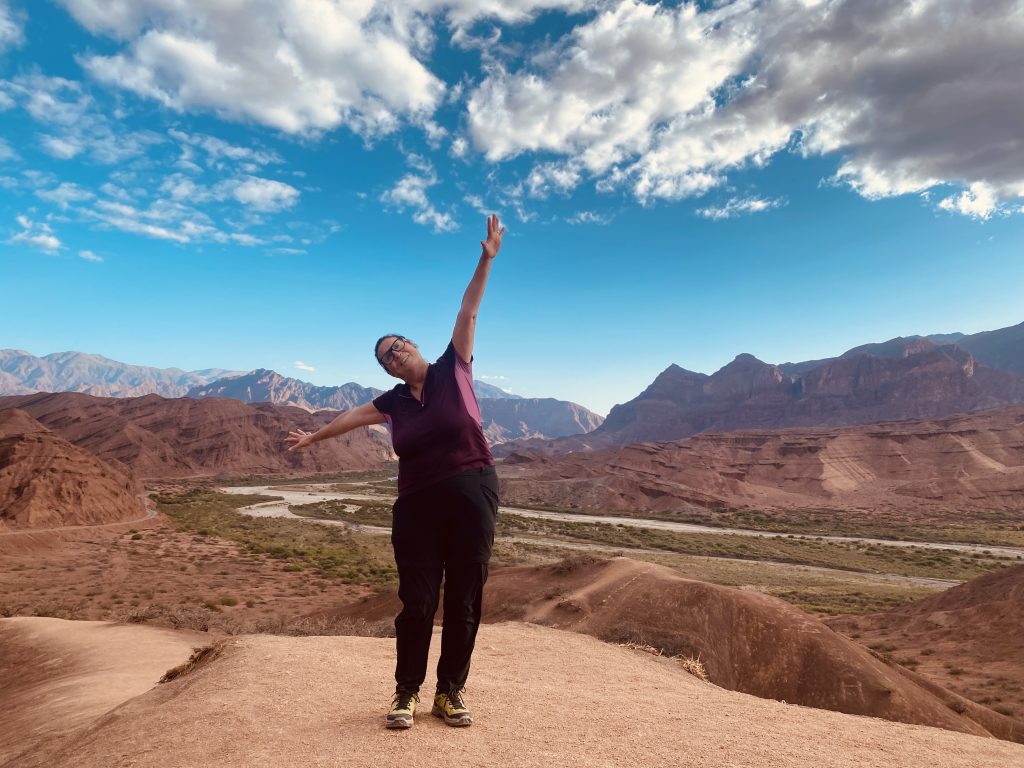
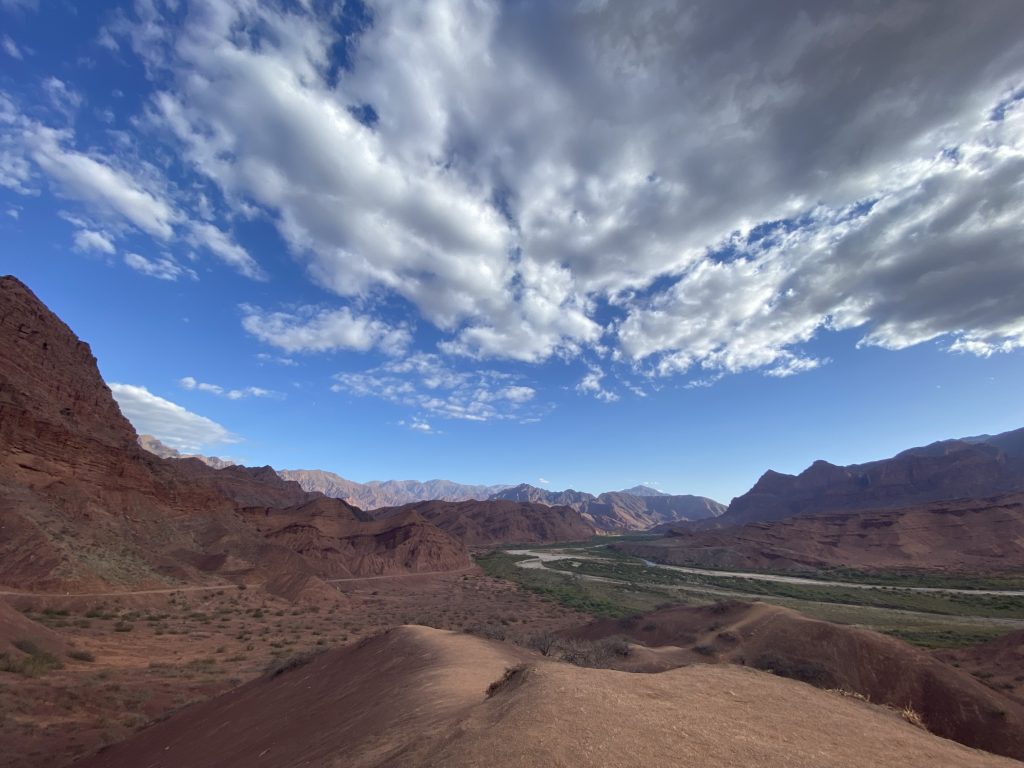
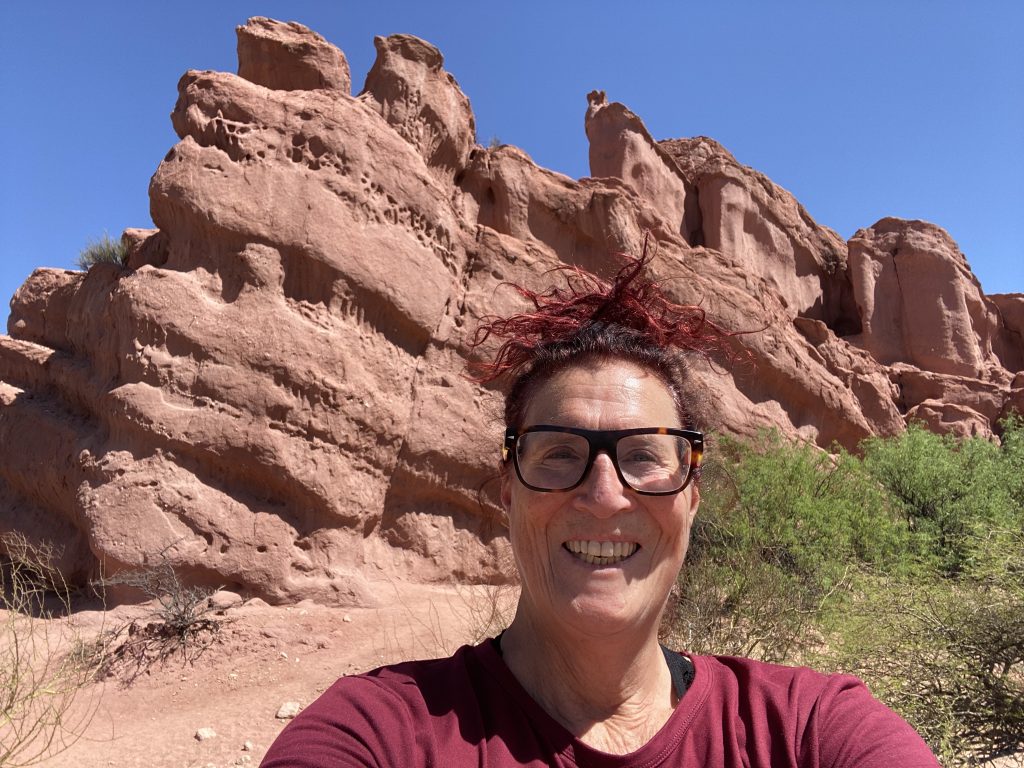
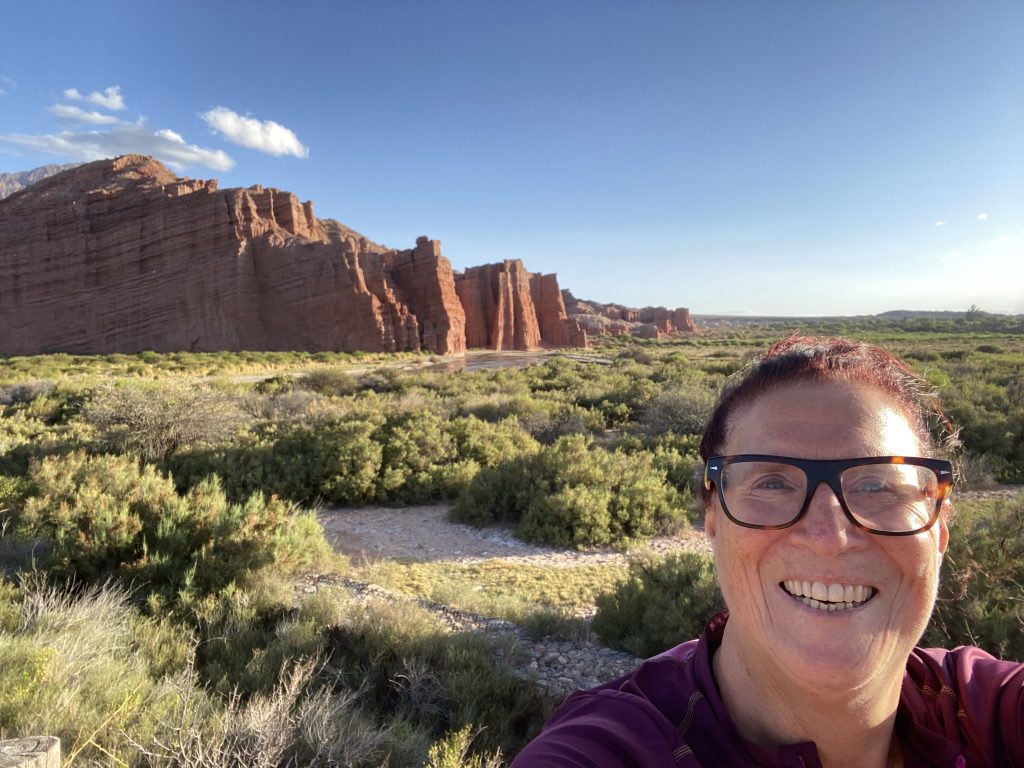
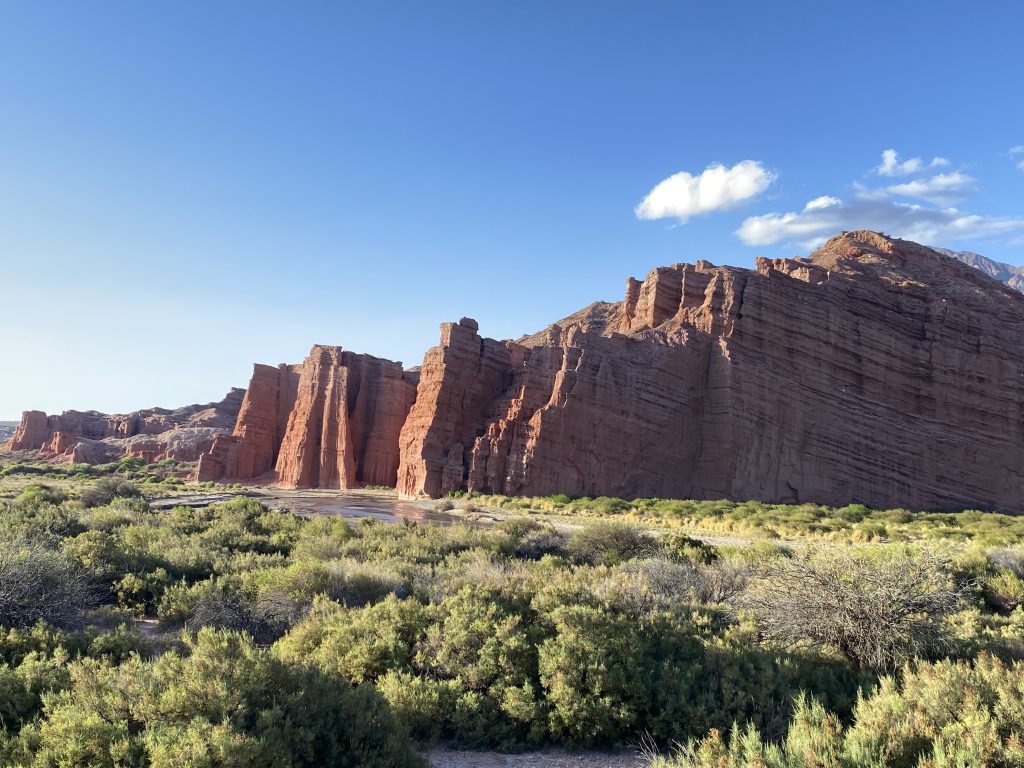
Nature flipped a switch. The landscape exploded into dramatic layers of red, green, ochre, and violet mountains, like someone had gone absolutely feral with a giant watercolour brush.
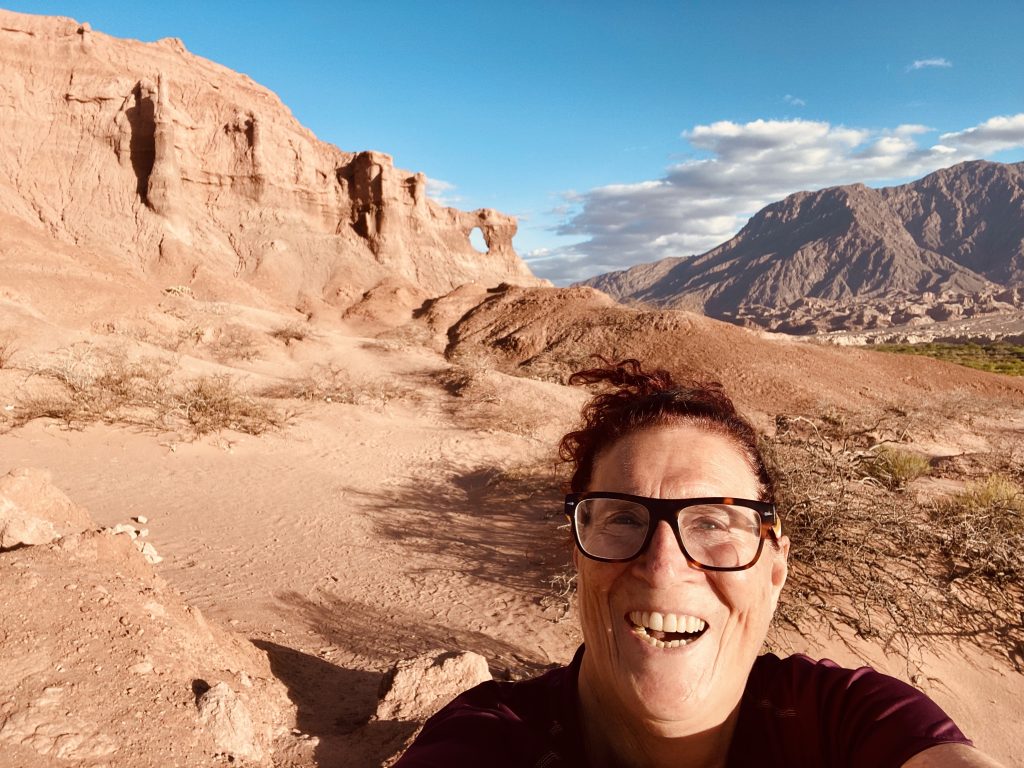
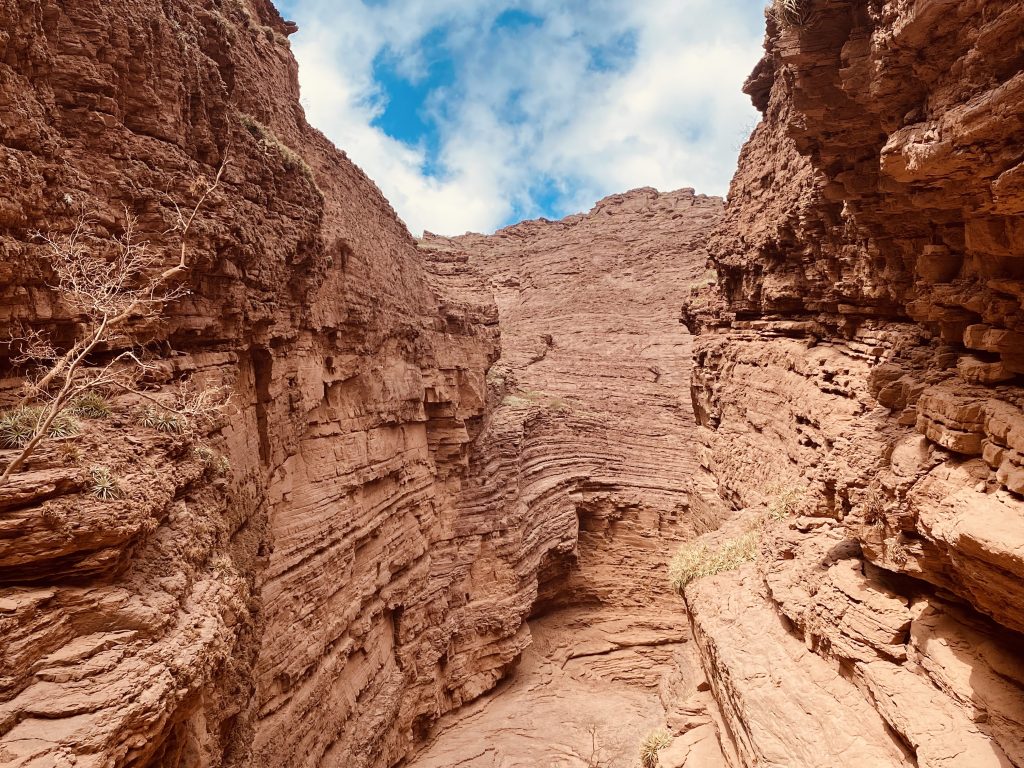
Every few bends brought a new marvel: El Anfiteatro, Las Ventanas, Los Castillos, and yes, another Garganta del Diablo (apparently every Argentine province gets one). Each stop had us gasping and declaring, “This must be the best view!”, until the next corner proved us laughably wrong.
By sunset, the mountains were soaked in molten gold. It was one of those moments that quietly rearranges something inside you.
We rolled into Cafayate just before dark… straight into a full-blown fiesta.
The town was celebrating its patron saint, which meant closed streets, music echoing through the air, and a population that appeared to be dancing, grilling, or both. Thanks to Google Maps and several dirt roads posing convincingly as streets, we found our lodging and headed back out to join the chaos.
The night smelled like grilled corn, empanadas, and something sugary-fried that whispered try me.
We landed at a local restaurant with front-row seats to a parade of candles, live music, and laughter.
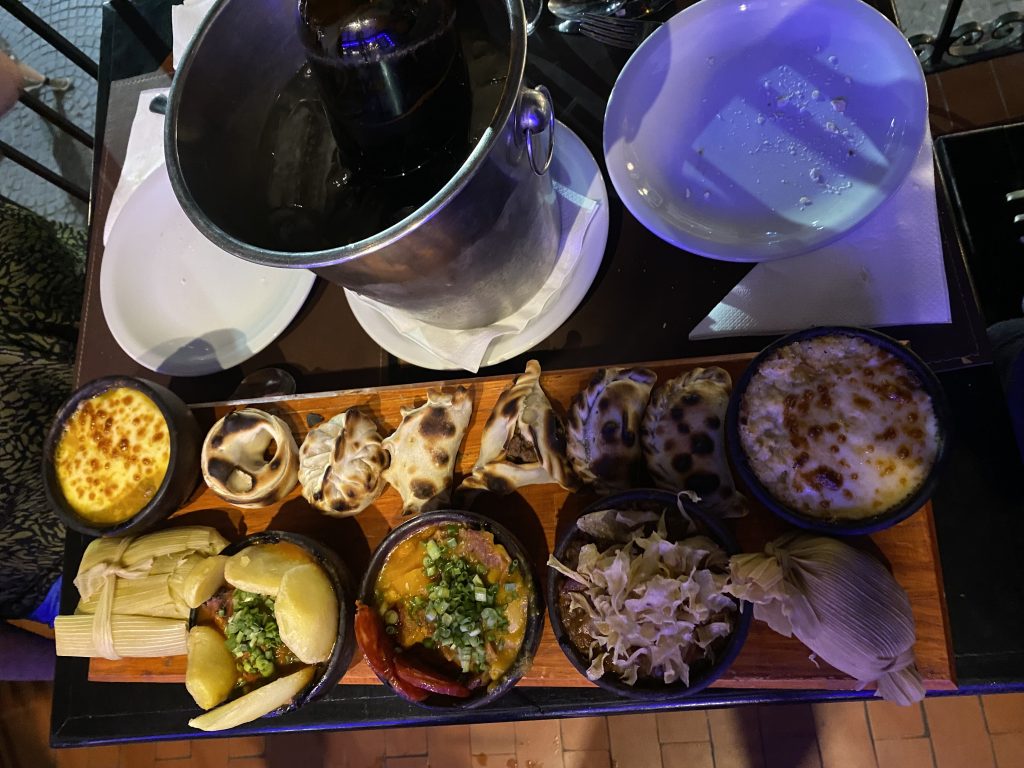
I ordered locro, a slow-cooked pre-Incan stew of beans, corn, and squash that tasted like it had been simmering since the dawn of civilisation.
Yoni went for lomo de llama. Sí, llama. Verdict? Surprisingly excellent.
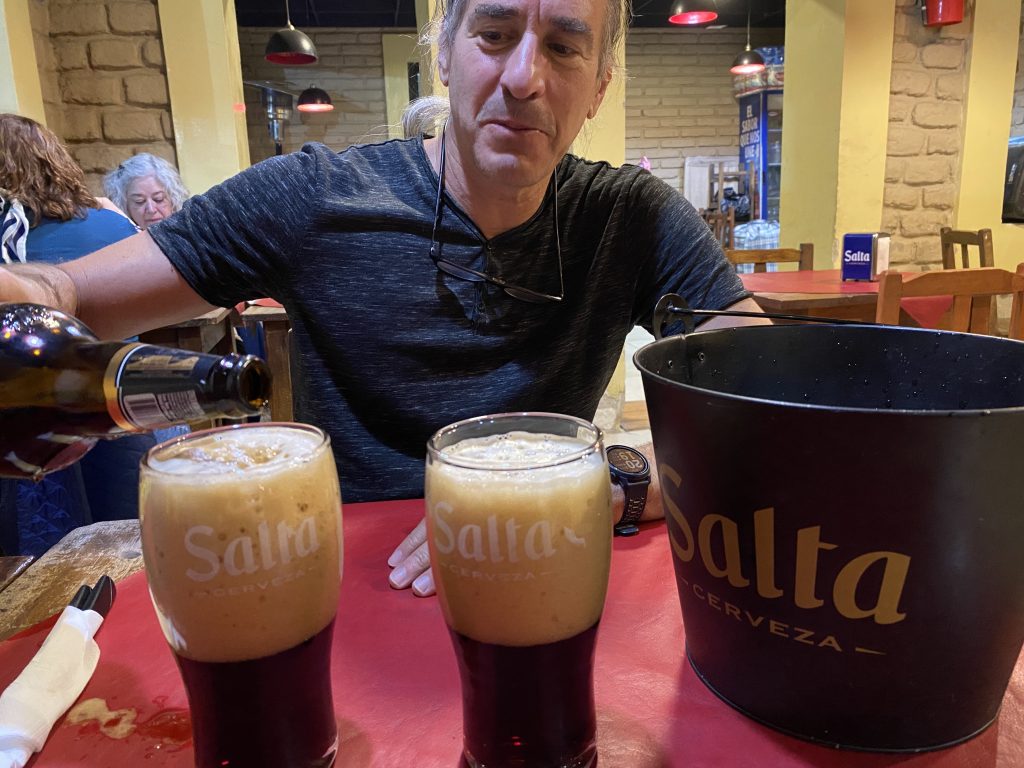
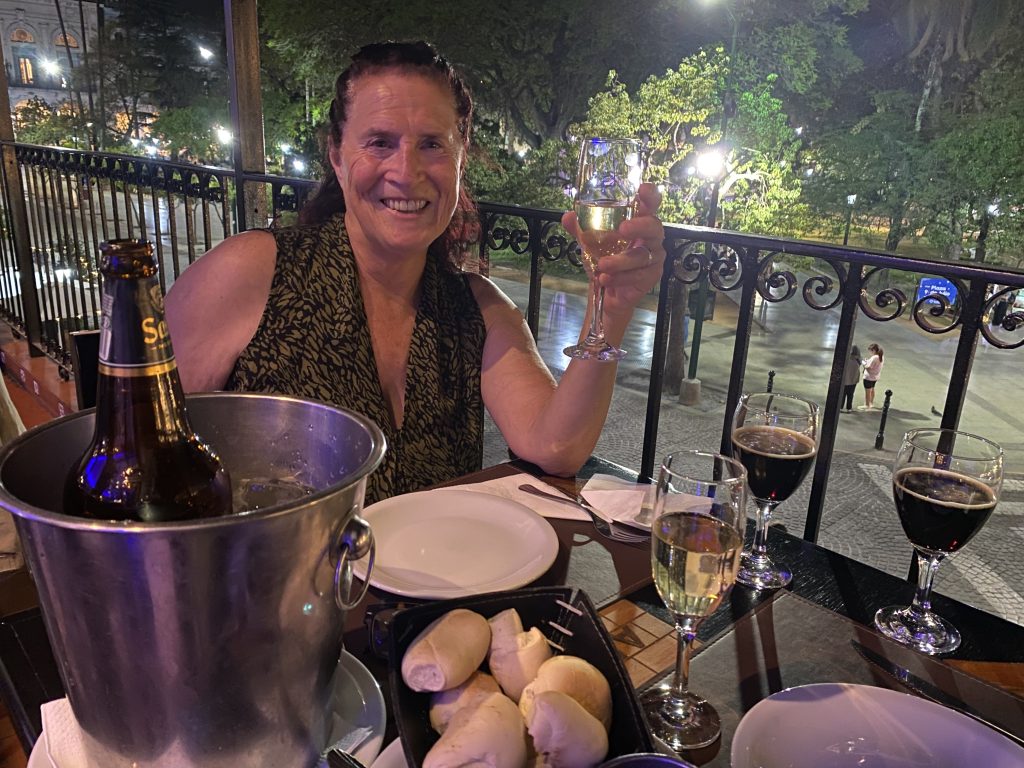
We washed it down with a dark local beer, malty, rich, and oddly nostalgic, transporting me straight back to childhood, when “beer” meant a sweet, alcohol-free drink kids could sip without scandal. Dessert was alfajores from a street stall. We’ve now officially tried them. Once was enough.
That night, music and laughter drifted through the warm air as I fell asleep, already curious about what this wild region would throw at us next.
Morning came with an Oscar-worthy sunrise: mountains glowing in gold and crimson, like a Hollywood lighting crew had clocked in early.
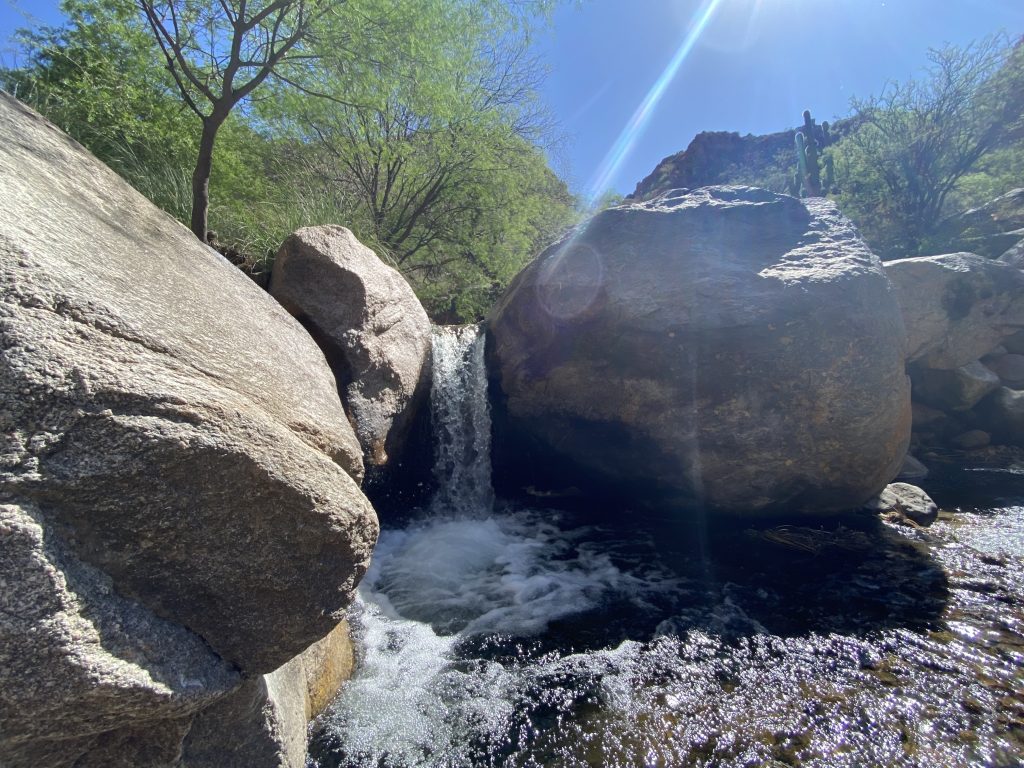
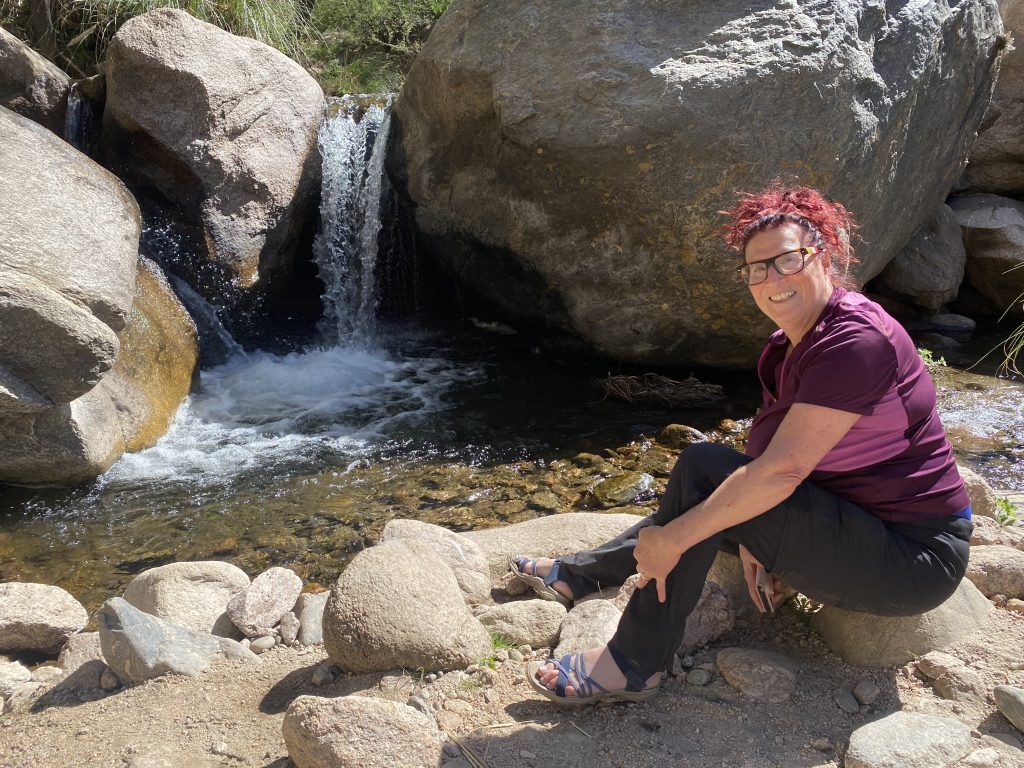
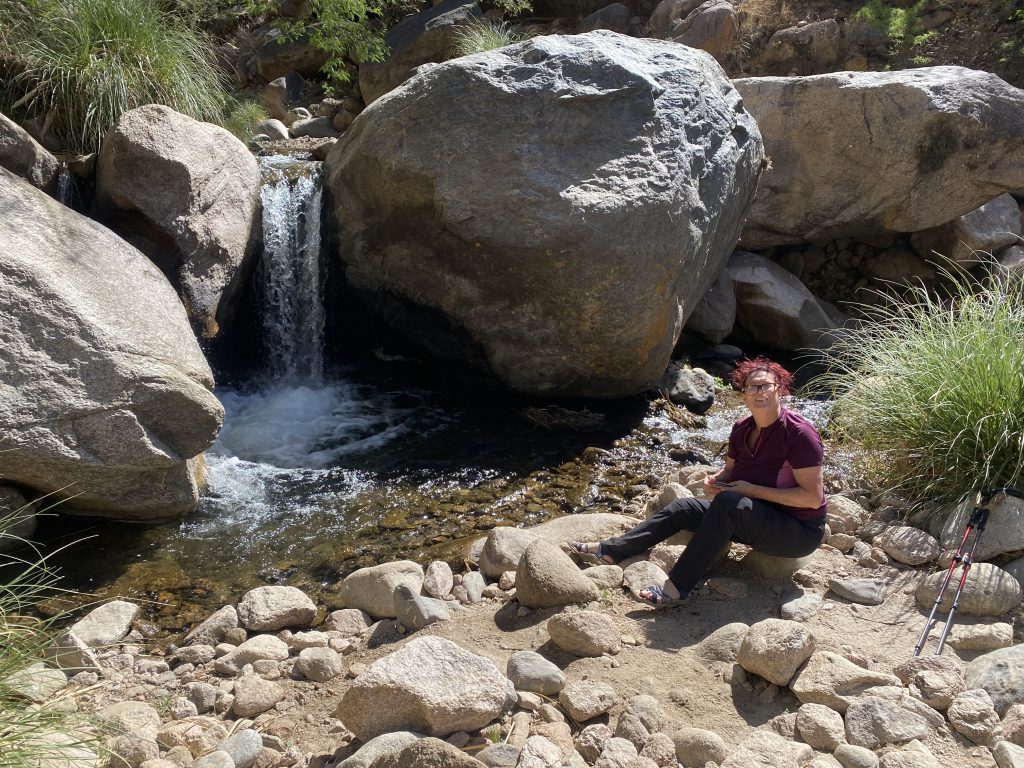
After a “late” breakfast (8:30, apparently we’ve redefined time), we set off for the Rio Colorado Cascades, a hidden canyon trail leading to six waterfalls.
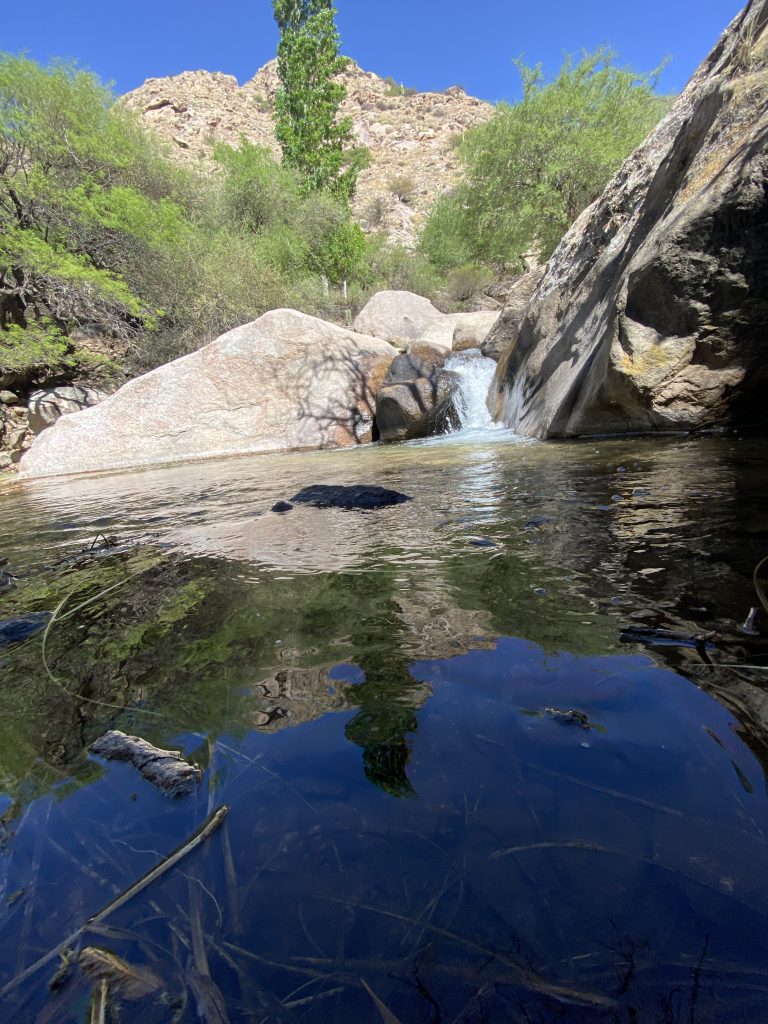
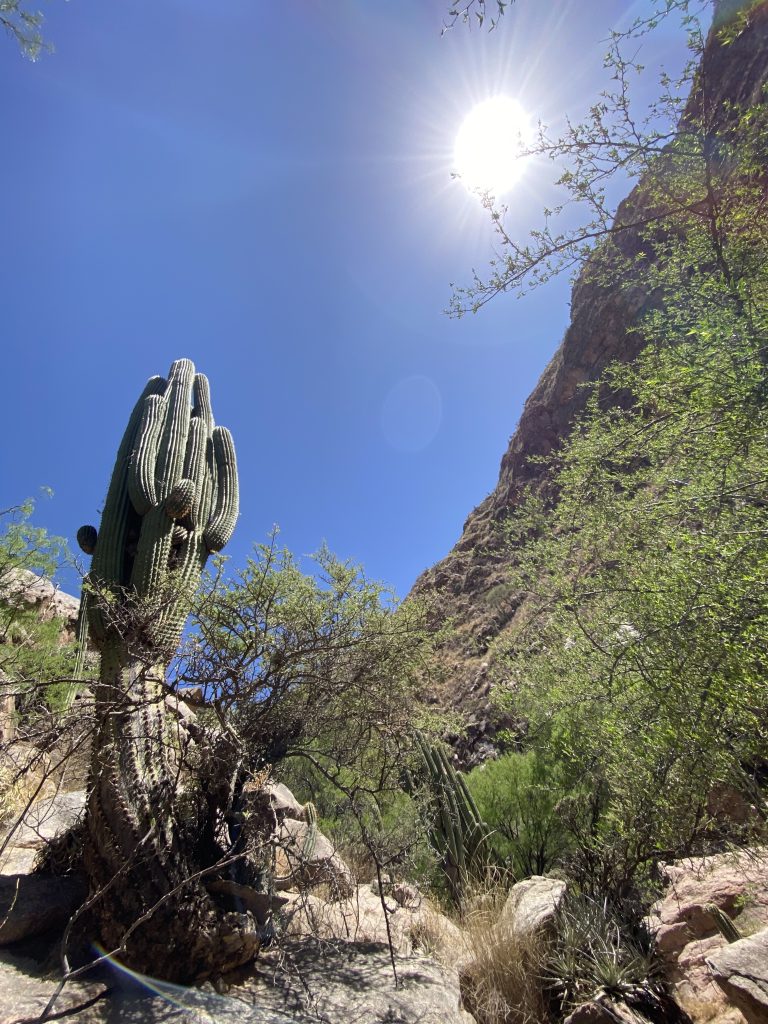
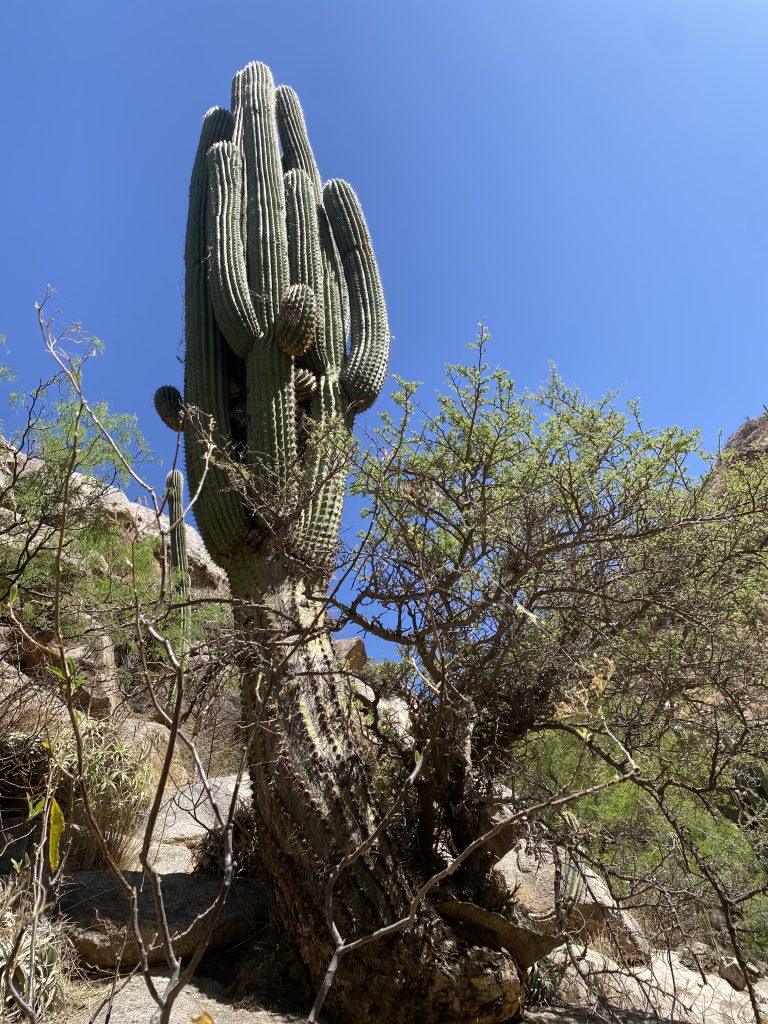
After Iguazú, you’d think we’d have had our fill of falling water. Absolutely not. Here, the drama was different: desert cliffs, cacti, red rock, and water appearing where it has no business existing. The guides warned that the trail was hard to find and that the last three waterfalls were for people with mountain goat DNA.
My knees declined the invitation, so we opted for the first three.
At the entrance, we discovered that guides were mandatory. Fine by me. Within minutes, my hiking poles proved decorative at best, so Yoni became my official pole carrier, adding “human pack mule” to his growing travel résumé.
The trail was stunning. Blue sky, cactus-covered cliffs, and families diverting water into clever mini-irrigation systems to grow fruit trees and vegetables.
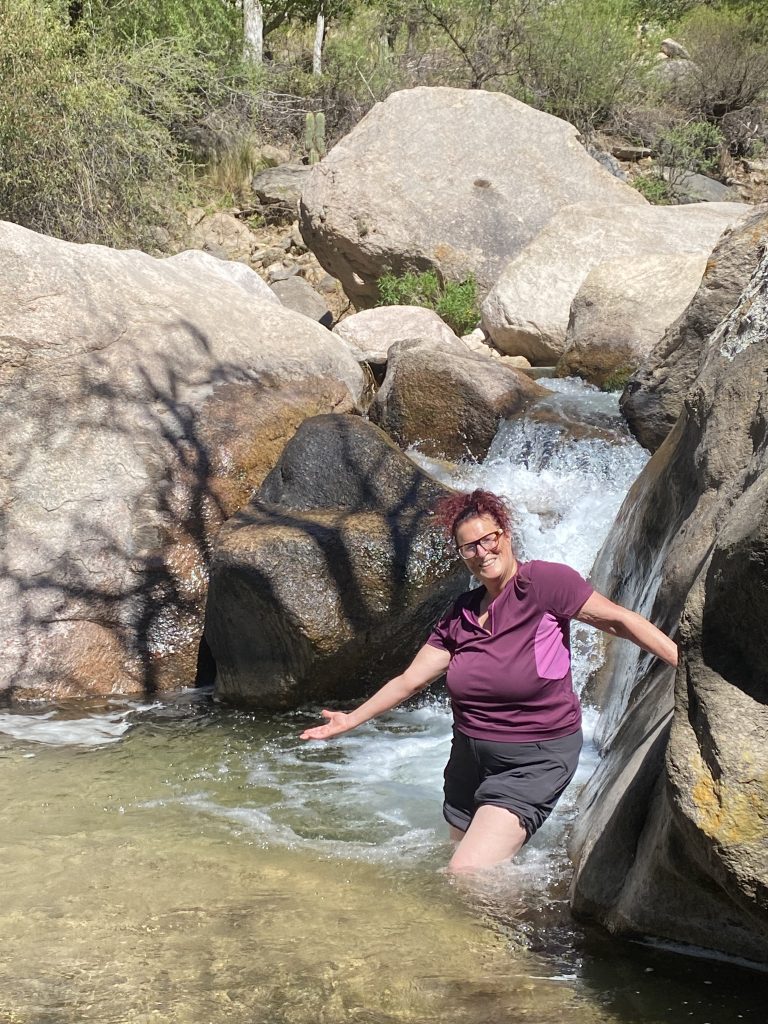
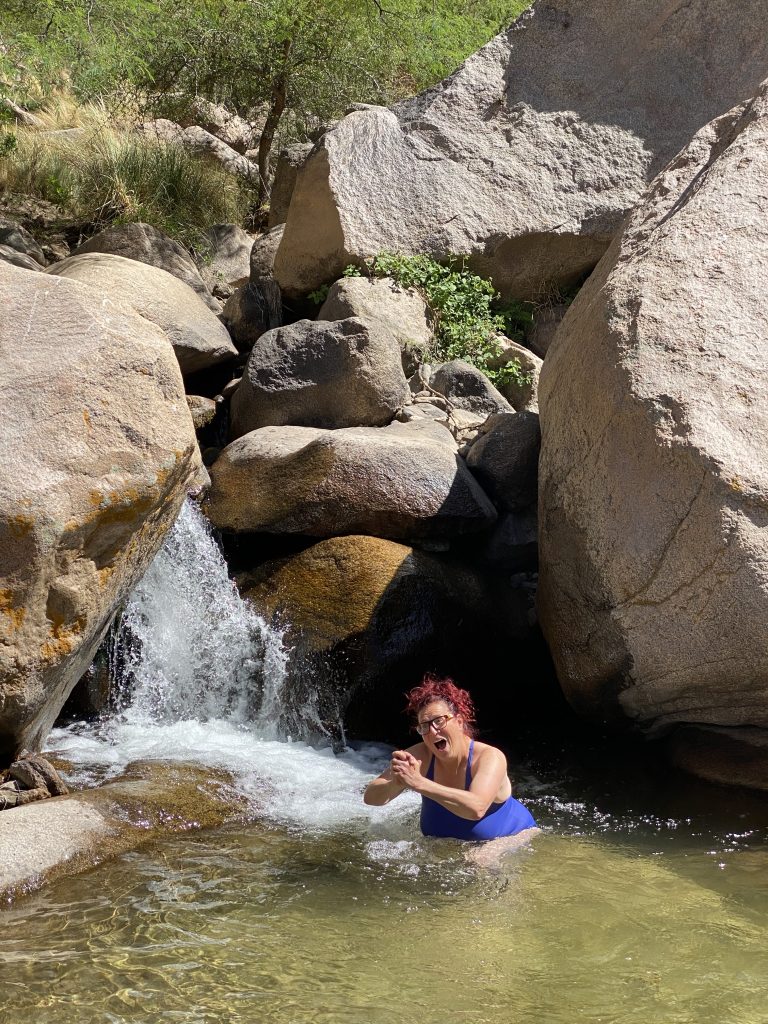
Off-grid ingenuity at its finest. Then came the waterfalls. By the third, resistance was futile. The water was glacial, an espresso shot straight to the soul, but after six years of cold showers, I dove in, squealed, and even managed a quick “shampoo under the cascade” moment worthy of a Patagonia ad… if Patagonia sponsored lunatics.
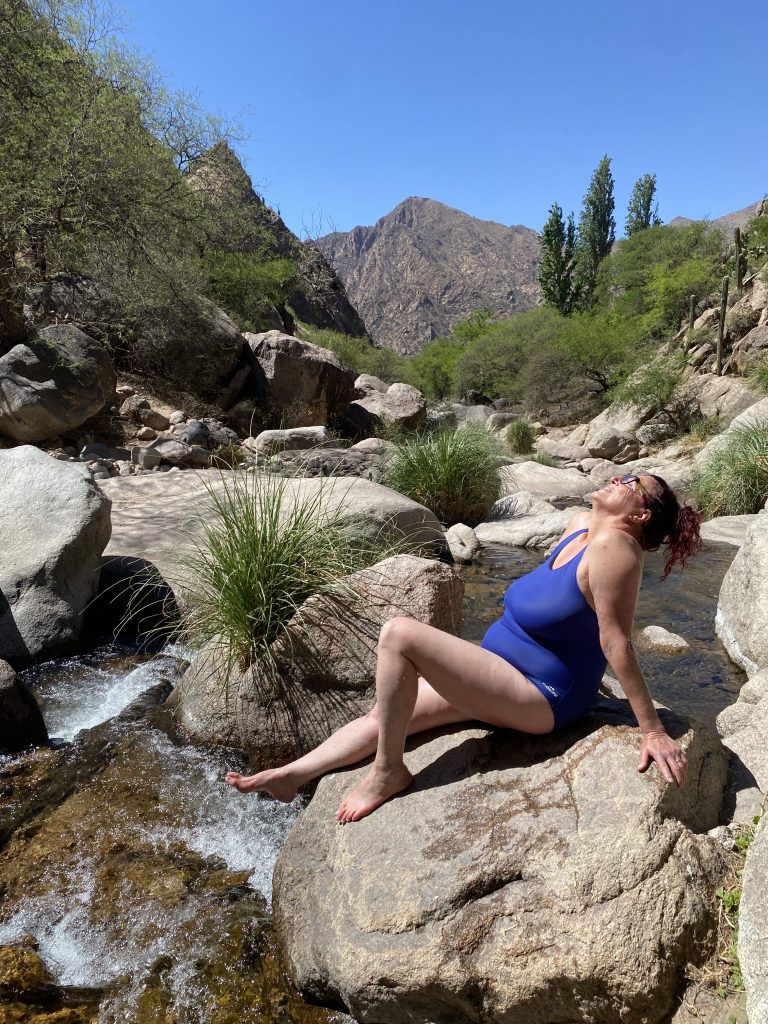
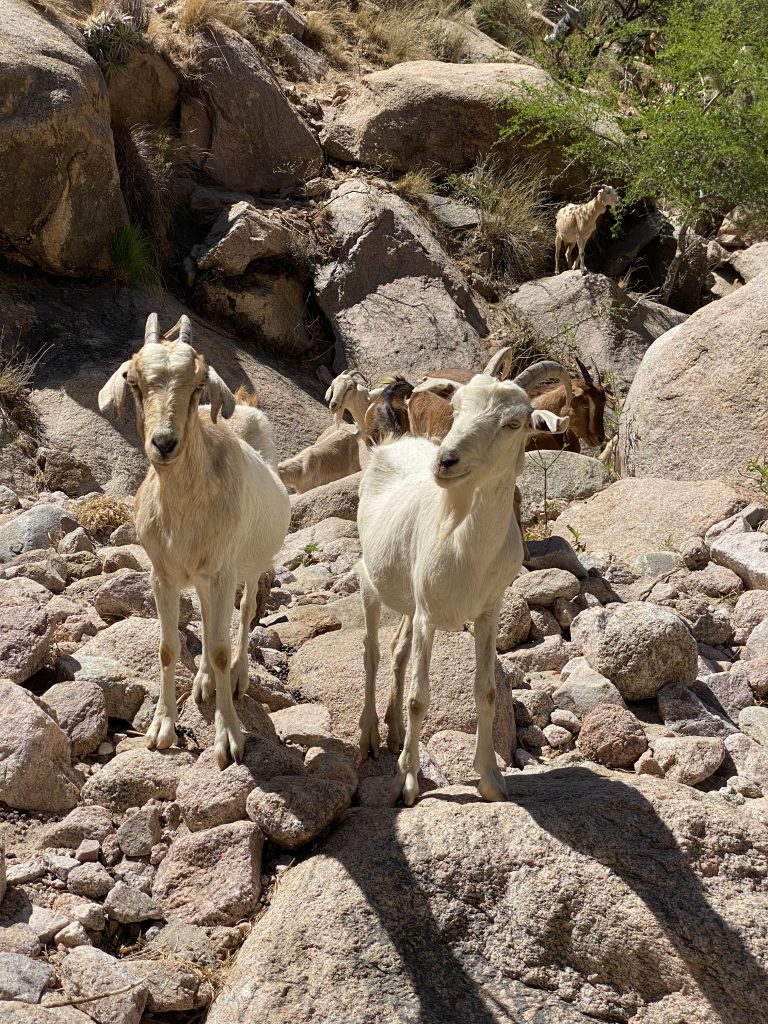
I thawed on a warm rock like a lizard, just in time for a herd of goats to wander past, casually judging my life choices. Perfect ending.
And then came morning number three.
I woke up to news that made everything else stop. The kind that drops you straight into tears…good tears, the kind made of relief and hope.
The long-awaited agreement was finally signed. The hostages are coming home.
For two years, that shadow had been there, every day, everywhere. October 7, 2023, carved something permanent into all of us.
Even surrounded by beauty and wonder, part of me was always holding my breath. That morning, I finally exhaled.
The road ahead is still long, healing always is, but this felt like the first sunrise after a very long night.
I cried, smiled, and cried again, this time with gratitude.
Then life, in its strange wisdom, reminded me that joy often comes with dusty roads.
We packed up and drove Route 68 back toward Salta, the return journey revealing landscapes we’d somehow missed the first time.
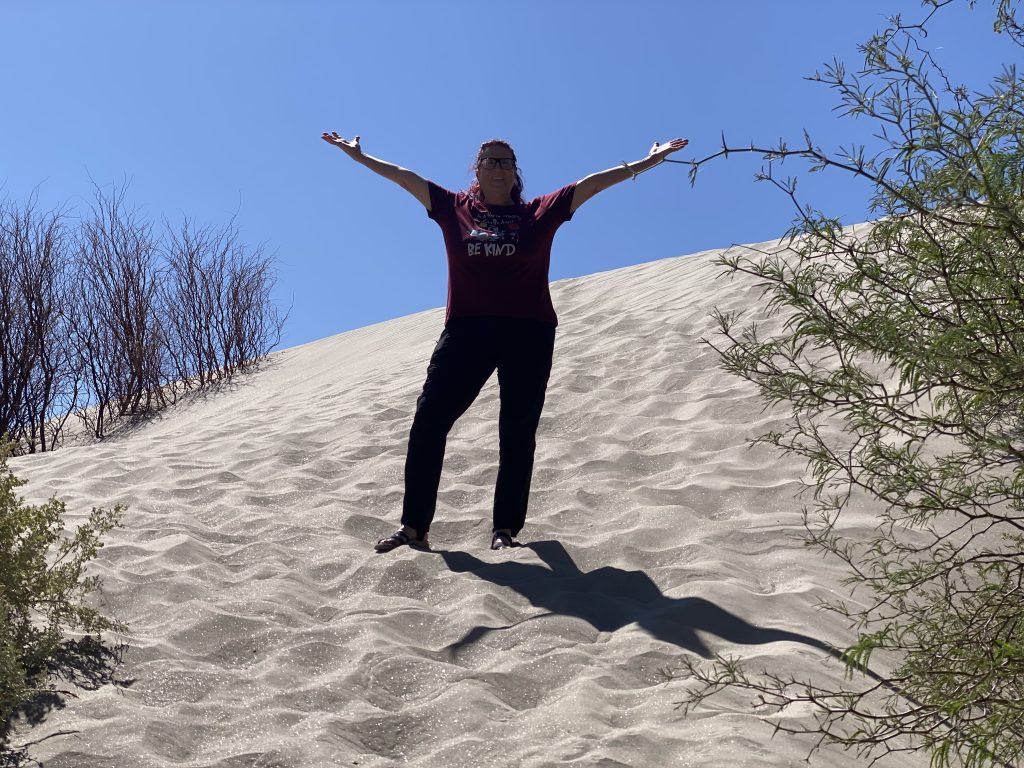
Our first stop was Los Médanos, giant sand dunes that look like nature got bored with mountains and built a sandbox instead.
Naturally, I reverted to my ten-year-old self, climbing the biggest dune I could find and running down it shrieking with laughter.
Sand everywhere. Completely worth it.
By late afternoon, we rolled into Salta city, sandy, happy, and starving. We broke our “cheap but tasty” rule and treated ourselves to a proper celebration dinner.
The food was divine and enormous. The doggy bags were so large they practically deserved their own passports.
Tomorrow, a new province awaits: Jujuy. New colours, new landscapes, new stories.
Stay tuned. The adventure, and my sand collection, continues.