
Mongol Rally: Bukhara, Uzbekistan – A Journey Through Time.
As we leave Turkmenistan with its weird and haunting sites, we head into Uzbekistan, and after a long desert driving and dodging potholes, we finally rolled into Bukhara – one of the most ancient cities along the Silk Road and a place where history feels alive.
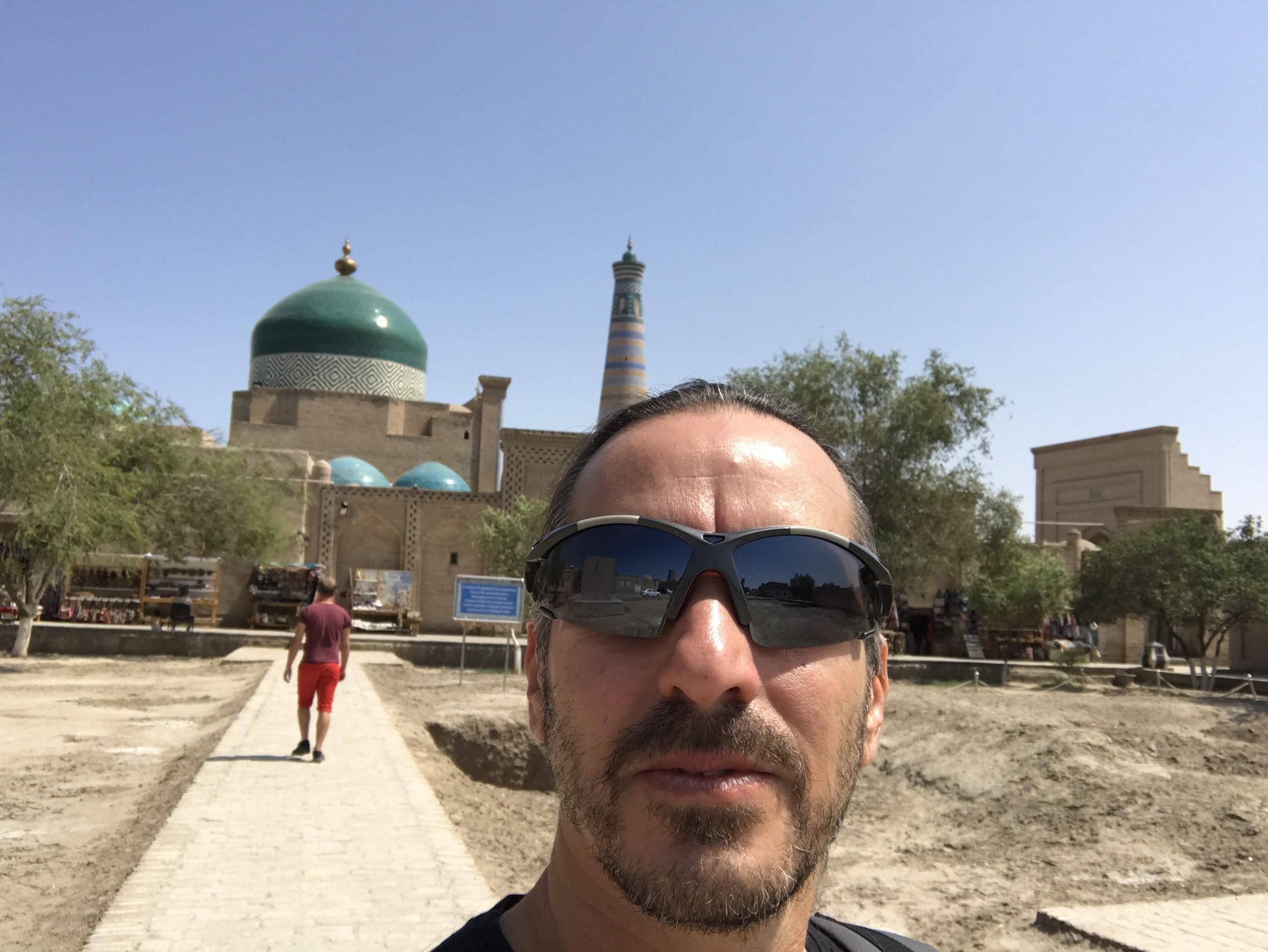
Bukhara is a city that looks like it was lifted straight out of an Arabian Nights tale, a labyrinth of narrow streets, mosques, and bazaars framed by ancient, golden-brick buildings that have been standing for over a millennium.
Bukhara’s Architecture: Time-Traveling to the Silk Road
The minute we stepped into the heart of Bukhara, it was like traveling back in time.
Every turn revealed another jaw-dropping piece of architecture: massive medressas (Islamic schools) with their intricate blue-tiled facades, towering minarets that once served as watchtowers and signals to travelers, and the Kalon Mosque – big enough to hold 10,000 people under its dome.
The Po-i-Kalyan complex, with its 48-meter-high minaret, has survived centuries of earthquakes, invasions, and time itself.
Known as the “Tower of Death” because criminals were allegedly thrown from the top back in the day, this minaret now serves as a beacon of Bukhara’s endurance.
Markets: A Feast for the Senses
The ancient bazaars of Bukhara are where the action happens.
Wandering through the labyrinth of stalls, we were bombarded with the vibrant sights and smells of the Silk Road era.
Piles of spices, silk scarves, handmade carpets, and beautifully painted ceramics.
Lots of tourists to complete the picture.
Next, we hit the food market, where the smells were overwhelming.
Vendors yelled out offers for everything from fresh fruits and vegetables to massive slabs of lamb, spicy samsas (the Uzbek version of a meat pie), and the famous plov – an aromatic rice dish cooked with beef, lamb, carrots, and spices.
Bukhara’s Jewish Quarter: A Forgotten History
But Bukhara isn’t just mosques and markets.
It has a deep, forgotten history – which was important to Vered – its ancient Jewish quarter. In the heart of this Islamic city stands one of the oldest synagogues in Central Asia, a modest but sacred space hidden within the winding alleyways.
Bukhara was once home to a thriving Jewish community, known as the Bukharan Jews who settled here nearly 2,000 years ago – among them some of Vered’s ancestors.
The synagogue itself felt like a time capsule, with ancient Torah scrolls still tucked away in the ark, and remnants of the old Jewish life scattered around.
I even met one of the last remaining Jews in the city, who loved hearing I was born and grew up in Israel.
Bukhara at Sunset: A Golden Glow
As the sun dipped lower, the entire city turned golden.
The desert wind picked up, and Bukhara’s brick and stone structures seemed to glow in the twilight.
We wandered the streets, had a delicious dinner with some other rally friends, the call to prayer echoing through the air, mingling with the sounds of the bustling market as it began to wind down for the night.
Just before we could roll out of Bukhara and hit the road again, we ran into a problem that could have ended our rally right there – our tires were done.
Diana wasn’t going anywhere on those worn-out wheels.
But luck was on our side.
With the spare set of tires I had bought back in Germany, we made a quick pit stop at a local garage and in no time, the team had the new tires fitted.
The last clip captures a triumphant moment at the border of Uzbekistan and Tajikistan, where Diana finally made it across, propelling us into the next wild chapter of our adventure.
Another border crossed, another country waiting to be explored, and the rally keeps on rolling!
More from the Mongol Rally here: